Approximately 30 faculty members gathered May 15 in the Biotechnology Building to share lessons learned after teaching in the Canvas management system for the Spring 2019 semester.
Demonstrating a new type of space technology, 105 of the world’s smallest free-flying satellites have just completed orbiting Earth, sending short signals received by a ground station at Cornell.
The Atkinson Center is awarding more than $1.3 million in seed grants to support roughly a dozen interdisciplinary research collaborations at Cornell that address key sustainability challenges.
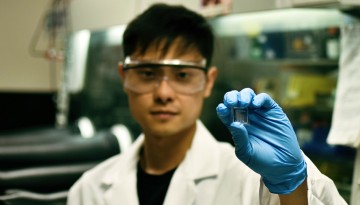
The debate over how one of the most popular osteoarthritis treatments should be federally regulated could change, thanks to Cornell research that provides a better understanding of the science behind hyaluronic acid injections.
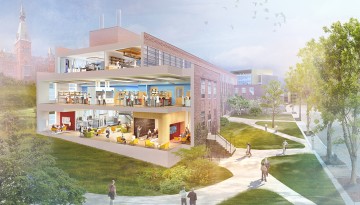
A $10 million gift from the Fleming family will establish the Samuel C. Fleming Molecular Engineering Laboratories, a new state-of-the-art lab spanning the entire north wing of Olin Hall.
Five doctoral students in engineering will spend a fully funded semester examining the business prospects for a diverse array of Cornell technologies as the newest class of commercialization fellows.
At its May 25 meeting, the Cornell Board of Trustees elected seven new trustees to four-year terms and one new trustee to a two-year term; they will join two new alumni-elected trustees, the new undergraduate student-elected trustee and four re-elected trustees when terms begin July 1.