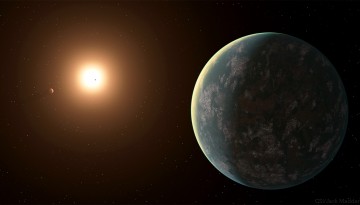
An international team of astronomers led by Cornell’s Lisa Kaltenegger has characterized the first potentially habitable world outside of our own solar system.
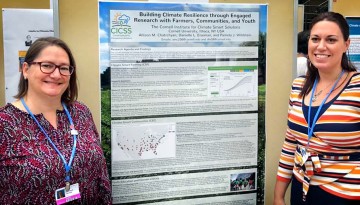
A Cornell researcher is collaborating to help Scotland achieve net zero carbon emissions by 2045 through education to support new, stronger climate-action policies.
An artificial intelligence system developed by a Cornell-led team has identified a promising material for creating more efficient fuel cells – a potential breakthrough in both materials science and machine learning.
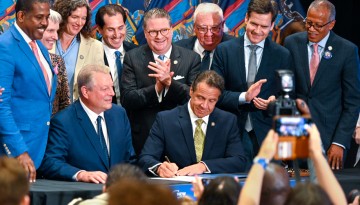
Cornell professor Bob Howarth played a key role – reckoning methane as a carbon dioxide equivalent – in New York’s Climate Leadership and Communities Protection Act.
The new Shen Fund for Social Impact will enable students to pursue engineering projects that could benefit society by using technology in innovative ways.
Having healthy gut flora – the trillions of bacteria housed in our intestines – could lower the risk of infection following knee and hip replacement surgeries, while an unhealthy intestinal flora may increase the risk of infection.
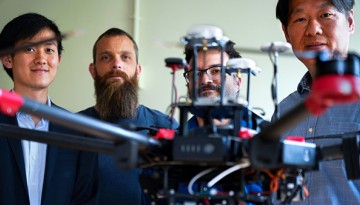
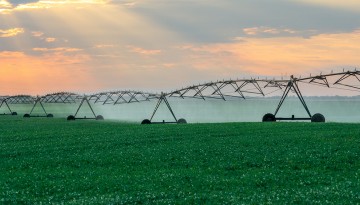
A predictive model combining information about plant physiology, real-time soil conditions and weather forecasts can save 40% of the water consumed by traditional irrigation strategies, according to new Cornell research.
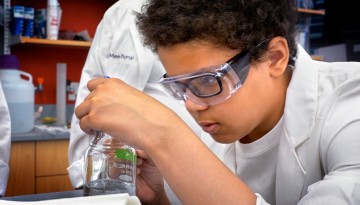
Five students from Watertown’s Wiley Intermediate School 4-H after-school program will watch their experiment soar from Cape Canaveral on July 21 to the International Space Station.
Cornell is launching the Engineering Management Distance Learning Program, which will allow working professionals to earn Master of Engineering degrees while remaining on the job.