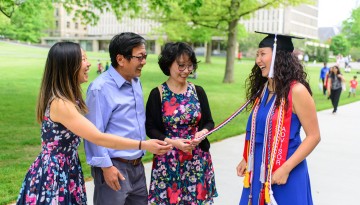
As students began to line up for Cornell’s 2019 Commencement May 26, the morning skies that threatened rain gave way to rays of sunshine wriggling between the clouds. Smiles, pomp and circumstance followed.
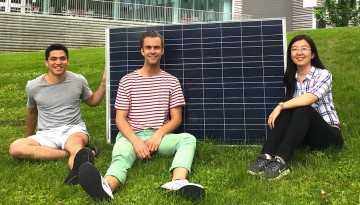
While solar farms help summer electricity demand, Cornell engineers caution that upstate winters could prompt “ramping” – bursts of sudden increases or decreases in electricity demand.
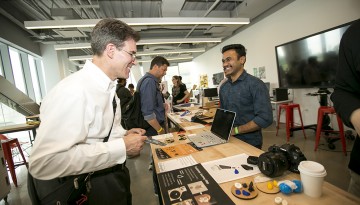
An intelligent assistant to manage gut disorders and an app that facilitates personal growth through continuous feedback from co-workers were among the winners of the fifth annual Startup Awards competition, held May 17 at Cornell Tech.
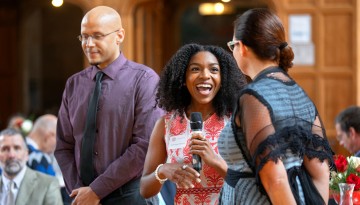
The arc of educational continuity and inspirational teaching was celebrated May 22 at the 31st annual Merrill Presidential Scholars convocation in Willard Straight Hall.
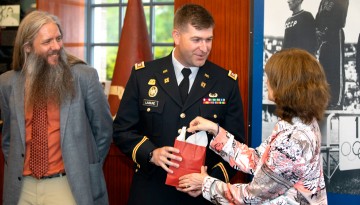
Thirty-three university staff members were recognized for earning academic degrees at the 23rd annual Staff Graduate Reception, May 20 in the Hall of Fame Room in Friends Hall.
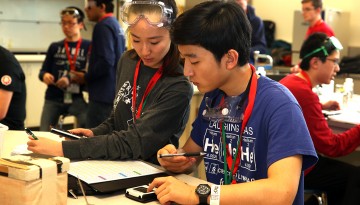
About 2,000 middle and high school students will show their science and engineering acumen at the 35th annual Science Olympiad National Tournament, May 31-June 1 at Cornell.
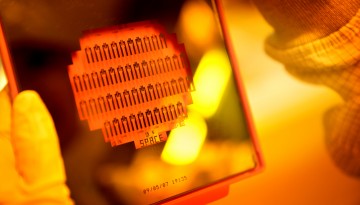
Since last August, graduate student Nicole Chu has been fabricating the foundation of a wearable air quality monitoring device, by using tools at the Cornell NanoScale Science and Technology Facility.
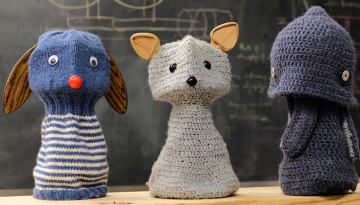
Blossom, a simple, expressive, inexpensive robot platform developed by Cornell researchers, can be made from a kit and creatively outfitted with handcrafted materials.