Engaged Graduate Student Grants will support 21 Cornell doctoral students and their community partners researching a range of topics.
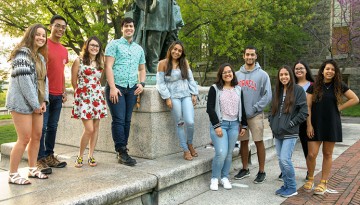
Visiting students from hurricane-ravaged Puerto Rico honed their science skills by shadowing and working in laboratories across campus this semester.
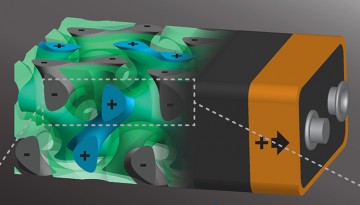
Uli Wiesner and collaborators have developed a block copolymer self-assembled 3D energy storage architecture that could help change the way batteries are constructed.
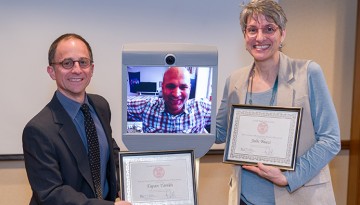
Two Cornell faculty members were awarded the 2018 Kaplan Family Distinguished Faculty Fellowship on April 24.
An Atkinson Center workshop May 4 looked for ways to use Cornell research to draw carbon out of the air and oceans and sequester it.
Cornell has teamed with the University of Bologna to establish the Cornell-Bologna Center for Vehicle Intelligence.
Cornell’s CubeSat, a water propelled spacecraft weighing less than 25 pounds, was on display May 9 at NASA’s Technology Day on Capitol Hill.
Student video game designers show off their work from this year at a free showcase May 18 in Carpenter Hall.
The U.S. Geological Survey’s “Guidelines for Determining Flood Flow Frequency” has been updated, thanks to a large group of Cornellians.