Dragon Day, the annual spring rite celebrated by first-year architecture students at Cornell for more than a century, is March 30. The parade across campus will be live streamed.
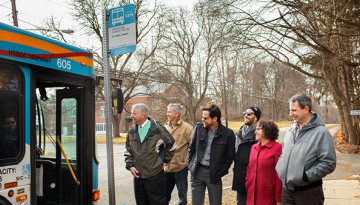
Tompkins Consolidated Area Transit is installing nearly 560 bus stop signs, redesigned in partnership with systems engineering students and the Cornell University Sustainability Design group.
Cornell goes green by celebrating Earth with Sustainability Month during April. More than 80 events are scheduled, including lectures, films, fashion, art and social justice events.
Campus leaders, students and family members attended a memorial service for the late Peter Meinig, who chaired the Cornell University Board of Trustees 2002-11.
Seven New York state businesses have been awarded funding to participate in the Cornell Center for Materials Research JumpStart Program, through which they will collaborate with Cornell faculty members to develop and improve their products.
Online gift-giving is spreading in social networks and causing people to give more gifts – online and in person – according to a new study led by René Kizilcec, Cornell assistant professor of information science.
The labs of Matt DeLisa and Dave Putnam has teamed with a group from Harvard to work on a vaccine delivery system based on DeLisa's versatile outer membrane vesicles.
Landscape Architecture’s Brian Davis and Sean Burkholder, University at Buffalo, received a $1.6 million grant from the Great Lakes Protection Fund for creating ecologic gold from shipping port sediment.
The color of money may be the best tint for keeping the world from warming was a key message at the Cornell Business Impact Symposium, “Unleashing the Hidden Power of Sustainability,” on March 10.