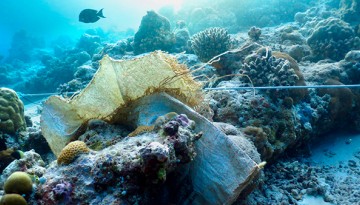
An international research group led by Cornell University has found that plastic trash – ubiquitous throughout the world’s oceans – intensifies disease for coral, adding to reef peril.
Development and testing by engineering professor Larry Bonassar and his group helped a New England biomedical firm land an $87 million contract to distribute their product in Japan.
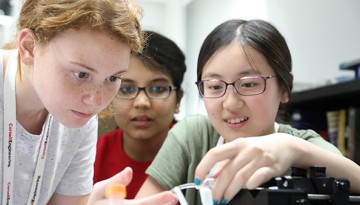
Cornell University has extended its partnership to incorporate computer science instruction and opportunities for STEM engagement with Public Prep, a New York City nonprofit network.
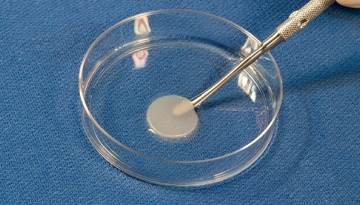
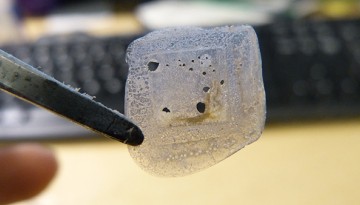
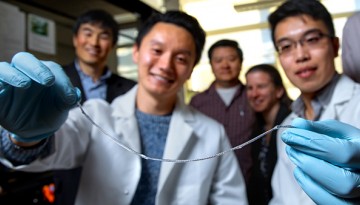
In an example of cross-campus collaboration, a group led by Minglin Ma has developed a unique implant for controlling type 1 diabetes, which affects more than 1 million Americans.
Using multi-photon microscopy developed at Cornell, a group led by Nozomi Nishimura has shown the ability to produce detailed, 3-D images of atherosclerotic plaque.