Cornell engineers have found that firing up diesel backup generators in non-emergency situations triggers rising atmospheric ozone concentrations due to additional nitrogen oxide emissions.
In a Cornell study of rats, researchers engineered a common gut bacteria, which when taken orally, helped control diabetes with the body’s own insulin. The study was published Jan. 27 in the journal Diabetes.
The Cornell Center for Materials Research announces that five New York companies will receive grants through the center's JumpStart program. The projects receive up to $5,000 in matching funds for costs.
The United States entered World War I on April 6, 1917. Scarcely a week later, 575 Cornell male undergraduates registered for military service, the university began a flight ground school soon after and women played lead roles in the war effort.
Cornell scientists have created a new computational method that can identify positions in the human genome that play a role in the proper functioning of cells. The research was published in the Jan.19 edition of the journal Nature Genetics.
1 million and counting: Scientific-paper repository arXiv has reached milestone with a million submissions. Cornell University Library has provided stewardship for arXiv, since its founder, Paul Ginsparg, joined the faculty in 2001.
Sara Xayarath Hernández, director of Diversity Programs in Engineering, has been named associate dean for inclusion and student engagement in the Graduate School. She will begin her new role this spring and also will serve as a University Diversity Officer.
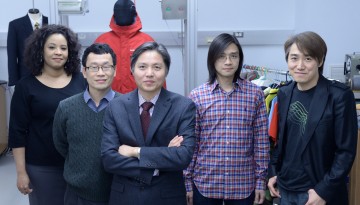
Warming up to a brisk idea to save building energy, the U.S. Department of Energy has awarded Cornell researchers a $3 million grant to create new clothes that integrate "air-conditioning" into undergarments.
Two Cornell computer scientists have been elected fellows of the Association for Computing Machinery, the world’s largest educational and scientific computing society. Thorsten Joachims recognized for work in artificial intelligence.