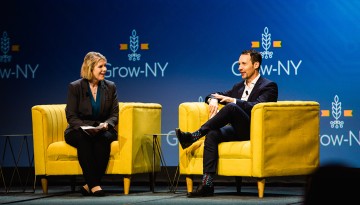
The fifth annual Grow-NY Summit will convene food and ag startups and industry players Nov. 14-15 at the Holiday Inn Binghamton Downtown, spotlighting the innovative technologies being developed locally and their impact that spans beyond the region.
Cornell researchers have harnessed the power of baker’s yeast to create a cost-effective and highly efficient approach for unraveling how plants synthesize medicinal compounds, and they have used the new method to identify key enzymes in a kratom tree.
Entrepreneurs will gather to hear fireside chats with top business leaders, enjoy multiple networking and engagement opportunities and hear startup pitches at Entrepreneurship at Cornell’s Eclectic Convergence 2023.
Cornell Engineering held its second annual EPICC Awards ceremony on Oct. 10, celebrating both staff and faculty whose work exemplifies the college’s core values: excellence, purpose, innovation, community, and collaboration.
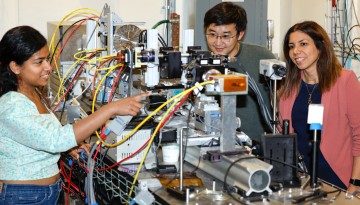
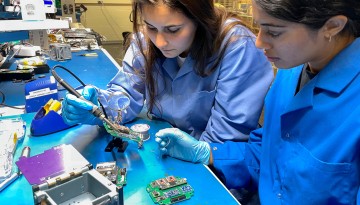
The Cornell Center for Materials Research (CCMR) is helping four small businesses advance their technology to grow the innovation economy in New York state.
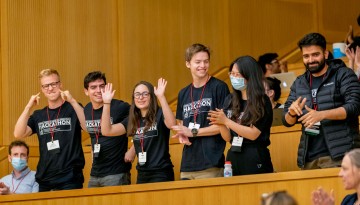
The hackathons, run by Entrepreneurship at Cornell, are open to undergraduate and graduate students from any field and major and take place from Friday evenings through Sunday afternoon.
Plant pathogens can hitch rides on dust and remain viable, with the potential for traveling across the planet to infect areas far afield, a finding with important implications for global food security and for predicting future outbreaks.
Cornell researchers used X-ray diffraction to study how microscale phenomena such as bending and fragmentation emerge in the nickel-based superalloy IN625 as it is being 3D printed.
Cornell is spearheading the New York Consortium for Space Technology Innovation and Development – a new initiative aimed at bolstering U.S. space technology research and manufacturing by uniting industry, academic and government partners.