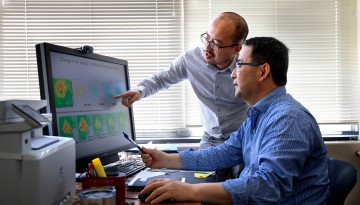
Professor Oliver Gao’s Systems Architecture and Management program helps organizations understand the value of systems architecture related to performance, lifecycle cost, schedule and risk.
N. K. Jemisin, award-winning fantasy author and critic, will give the Bartels World Affairs Lecture on Wednesday, October 4, at 5:30 p.m. in the Rhodes-Rawlings Auditorium.
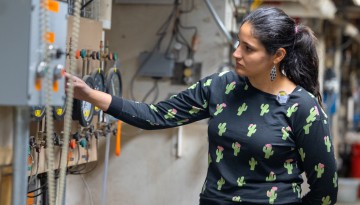
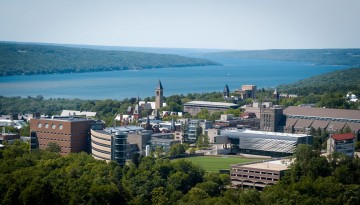
Wilson Synchrotron Laboratory has tapped into the university’s Lake Source Cooling system, which uses cold water from Cayuga Lake to remove heat from the district chilled water loop that cools most Cornell facilities.
Doctoral candidate Alexander Cruz and Professor Jonathan Butcher and doctoral candidate Don Long and Professor Praveen Sethupathy were selected for the 2023 Howard Hughes Medical Institute Gilliam Graduate Fellows Program.
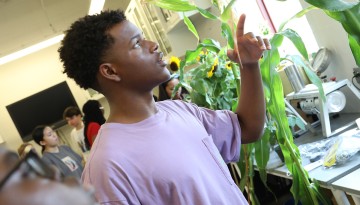
The CATALYST Academy engineering program at Cornell teamed up with CROPPS to discover how engineering and technology play major roles in plant science and agriculture.
An interdisciplinary team led by Cornell has received a five-year grant to launch a new center for engineering, testing and commercializing point-of-care diagnostic devices that will have international reach.
Cornell has been awarded a grant to fund the Regional Interdisciplinary Transportation Ph.D. Fellowship Program in Economics, Engineering and Policy – a unique program for doctoral students that will integrate engineering and economic research in the field of transportation systems technology.
Nicole Benedek, associate professor of materials science and engineering, uses theoretical and computational techniques to design functional materials that can improve modern technologies such as computer chips, ultrasound machines and solar panels.