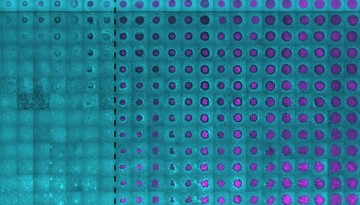
After an exciting summer of research, students from the Cornell Bowers CIS BURE program shared their results with faculty, mentors, and fellow students.
Nearly 200 new first-year and transfer students from 49 countries participated in Prepare, a virtual and in-person preorientation for international undergraduates, offered by the Office of Global Learning, part of Global Cornell.
Many medical studies record a patient’s race using only the broad categories from the U.S. Census, which may conceal racial health disparities, a new Cornell-led study reports.
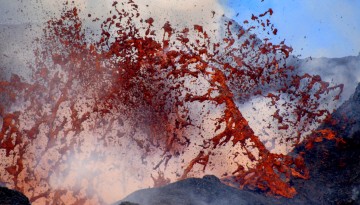
Geoscientists have long thought that water helps to drive volcanoes to erupt. Now, thanks to new tools at Cornell, scientists show that carbon dioxide can induce explosive eruptions.
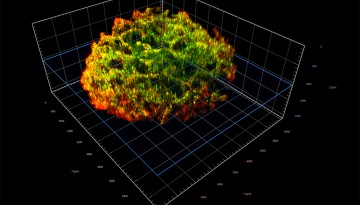
An interdisciplinary Cornell team has identified a new mechanism regulating tumor growth in the skeleton, the primary site of breast cancer metastasis: mineralization of the bone matrix.
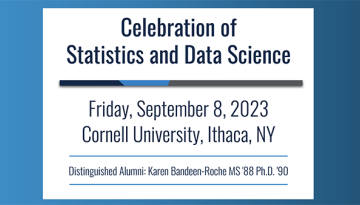
The day-long event will feature talks from seven field scholars, including this year’s recipient of the Distinguished Alumni award, Karen Bandeen-Roche, chair of the Department of Biostatistics at the Johns Hopkins Bloomberg School of Public Health.
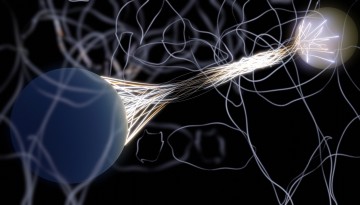
Cornell researchers used magnetic imaging to obtain the first direct visualization of how electrons flow in quantum anomalous Hall insulators, and by doing so they discovered the transport current moves through the interior of the material.
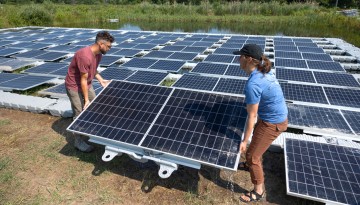
Steve Grodsky, assistant professor of natural resources, and a multidisciplinary team of researchers, soon will learn how solar panels placed on top of water bodies can affect the biology of aquatic systems.
Cornell researchers developed a multimodal platform to image microbe-semiconductor biohybrids with single-cell resolution, to better understand how they can be optimized for more efficient energy conversion.