A mathematician who has advised states and litigants on redistricting legislation will explore in a Feb. 5 lecture whether race-blind, computational approaches to law and policy can improve fairness.
In a recent study published in Social Science and Medicine, a multidisciplinary team sought to deepen regulators’ understanding of how both adults and teens respond to warning labels on e-cigarettes.
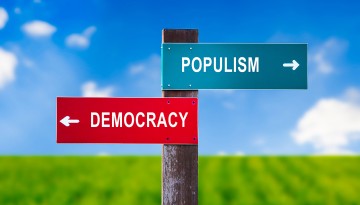
Democratic backsliding is occurring in an unprecedented number of wealthy countries once thought immune to such forces – the United States among them, finds a new analysis led by Cornell political scientists.
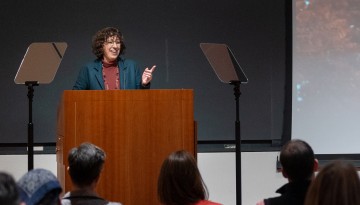
In her annual Address to Staff on Jan. 11 – Ezra Cornell’s 216th birthday – President Martha E. Pollack highlighted achievements that are helping to sustain and re-imagine the university’s founding “… any person … any study” vision.
With new funding from the National Institutes of Health (NIH), Cornell faculty will investigate how SBHCs are not only leaving a positive impact on students, but also on the wider community’s well-being and public services across four counties in upstate New York.
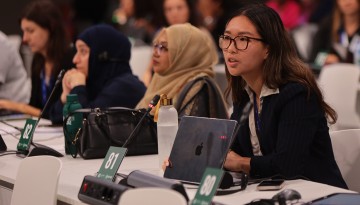
For public policy undergraduate, Cynthia Tan ’26, the chance to attend the 28th Conference of the Parties to the United Nations Framework Convention of Climate Change, more commonly known as COP28, in Dubai, United Arab Emirates, was an opportunity of a lifetime.
On Dec. 12, Jamila Michener offered expert testimony during a New York State Senate committee hearing focused on the causes and effects of poverty in the state’s small and midsized cities.