The Reynolds Foundation, established by Tim MBA '94 and Caroline Reynolds, and led by Dr. Álvaro Salas Castro MPA '14 as President and CEO, has committed $1.25M to fund a range of initiatives at the Cornell Jeb E. Brooks School of Public Policy.
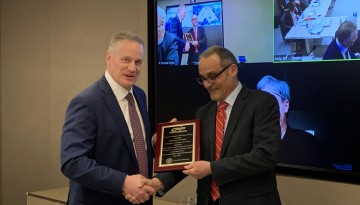
For his support in helping the Cornell Program in Infrastructure Policy access critical funding in his role as vice provost, Emmanuel Giannelis received the program's annual award during a ceremony in New York City.
Researchers from the Brooks School combined DMV suspension records with drivers’ ZIP code data and found that drivers from marginalized communities were disproportionately impacted by both nonpayment and noncompliance suspensions.
Cornell researchers and collaborators have developed a new framework that allows scientists to predict crop yield without the need for enormous amounts of high-quality data – which is often scarce in developing countries, especially those facing heightened food insecurity and climate risk.
Faculty and students joined community members, nonprofit leaders and Cayuga Health System representatives April 12-13 to explore a new vision for The Shops at Ithaca Mall focused on health equity.
Collaboration was the theme of the evening at the second annual Community Engagement Awards, held April 16 and hosted by the Einhorn Center for Community Engagement to celebrate excellence in local and global university-community partnerships.