Cornell is a global leader in sustainability and climate change research, teaching and engagement. Our campuses are living laboratories for developing, testing and implementing solutions that address these most challenging issues.

‘Triangle 2’ plastic containers may see environmental makeover

Recyclable plastic containers with the No. 2 designation could become even more popular for manufacturers as plastic milk jugs, dish soap and shampoo bottles may soon get an environmental makeover.

Study explores micromobility, improper parking in 5 cities

New research co-authored by Nicholas Klein in the Department of City and Regional Plannning studies improper scooter, e-bike and motor vehicle parking in five U.S. cities.

Faculty forge archaeology partnership at Pompeii

Caitlín Barrett and Kathryn Gleason ’79 have been collaborating since 2016 on the excavation and survey of a large house and garden site, the Casa della Regina Carolina Project, at Pompeii in southern Italy.

Improved CRISPR gene drive solves problems of old tech

Cornell researchers have described a new type of gene drive with the potential to delay resistance that wild populations employ to fend off the genetic engineering of desired mutations.

NYC Visioning projects host cross-campus events

The four faculty teams that received funding support through the President’s Visioning Committee on Cornell in New York City have conducted cross-campus workshops, hosted interdisciplinary talks and expanded their outreach.

‘Dramas of desperation’: Book examines naked protest in Africa

In her new book “Naked Agency: Genital Cursing and Biopolitics,” Naminata Diabate seeks a nuanced analysis of incidents of naked protest, particularly by women in Africa.

Quadrupling turbines, U.S. can meet 2030 wind-energy goals

The United States could generate 20% of its electricity via wind energy within 10 years according to new Cornell research.

Newly found bacteria fights climate change, soil pollutants

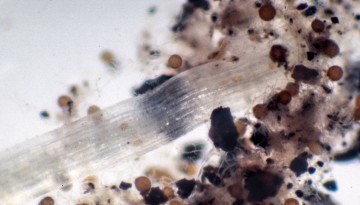
Cornell researchers have found a new species of soil bacteria – which they named after their late colleague, who first discovered it – that is particularly adept at breaking down organic matter.

Cornell scientists amplify ‘green’ research at AAAS

On topics ranging from oceanic disease to restraining invasive species from distant seas, Cornell faculty joined 10,000 scientists to discuss “Envisioning Tomorrow’s Earth” at the AAAS meeting in Seattle.