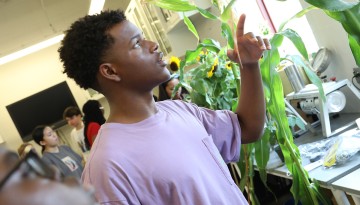
Cornell is a global leader in sustainability and climate change research, teaching and engagement. Our campuses are living laboratories for developing, testing and implementing solutions that address these most challenging issues.

Made in the shade: Growing crops at solar farms yields efficiency

In the face of climate change, growing commercial crops under acres of solar panels is a potentially efficient use of agricultural land that can boost food production and improve panel longevity.

Innovation at the fringe: the transformative design and architecture of the rural-urban

The first of two Preston Thomas Memorial Symposia this spring brings leading architects, designers, urban theorists, and researchers together across continents to discuss innovations generated at the intersection of the urban and the rural.

Around Cornell

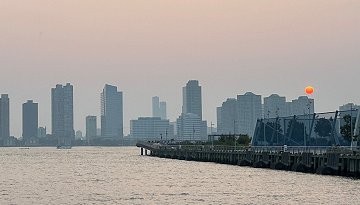
Cornell students help Tarrytown envision waterfront future

As sea levels rise over the next decades for low-lying Hudson River towns, Cornell landscape architecture students offered ideas for coping with climate change and embracing the water.

Cornell repatriates ancestral remains to Oneida Indian Nation

With apologies for causing harm and to right a wrong of history, Cornell returned ancestral remains that were kept on campus for six decades to the Oneida Indian Nation on Feb. 21.

Reid to address nitrogen pollution with NSF CAREER Award

Assistant professor Matthew Reid received an NSF CAREER Award to research how carbon can be transformed in the environment to create fuel for nitrogen-consuming bacteria, ultimately reducing nutrient pollution.

Around Cornell

Underwater robot helps explain Antarctic glacier’s retreat

First-of-their-kind observations reveal new details about melting at the grounding line of the vulnerable Thwaites Glacier that is contributing to its retreat and potentially to sea-level rise, according to Cornell researchers and international collaborators.

Milner wins Scialog award to advance methane mitigation

The Scialog initiative aims to catalyze advances in basic science that will enable technologies for removal of C02 and other greenhouse gases to become more efficient, affordable and scalable.

Around Cornell

Cornell-led Team Selected for NSF's Convergence Accelerator

The project, dubbed AUGER (Accelerating Use of Geologically-driven Engineering & Reclamation), was awarded $739K of funding from NSF’s Convergence Accelerator to support translational research combining x-ray and hyperspectral imaging capabilities at CHESS with remote sensing techniques to link macroscale data with microscale mineral properties to create predictive mining insights.

Around Cornell

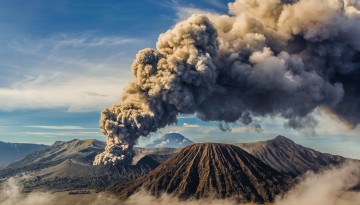
Precise magma locations aid volcanic eruption forecasts

Cornell scientists have unearthed precise, microscopic clues to where magma is stored in Earth’s mantle, offering scientists – and government officials – a way to gauge volcanic eruption risk.