Cornell is a global leader in sustainability and climate change research, teaching and engagement. Our campuses are living laboratories for developing, testing and implementing solutions that address these most challenging issues.
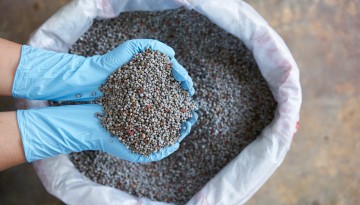

Students design robot to collect microplastics from beaches

The robot’s layered filtration system will gather tiny bits of plastic the size of a sesame seed and smaller, which contaminate ecosystems and damage human and animal health.

Warming climate prompts harmful oxygen loss in lakes

Unrelenting climate change is leading to extended, late-summer weeks of water stratification, which prompts varying degrees of oxygen deprivation in lakes, says new Cornell research.

MPA students find optimism at climate conference

Courtney Schneider (r) took a selfie with U.S. Secretary of Energy Jennifer Granholm, one of many memorable moments at the United Nations Conference on Climate Change. Three students in the Cornell Jeb E. Brooks School of Public Policy participated in the conference, known as COP27.

Around Cornell

Hot air balloon hotel concept wins international competition

Four students in the masters of management in hospitality program won The Sustainability Hospitality Challenge with a business plan for “NIMBUS,” a carbon-neutral hotel room that folds up and moves with its guests by hot air balloon.

Small fish could play big role in fight against malnutrition

Inexpensive, small fish species caught in seas and lakes in developing countries could help close nutritional gaps for undernourished people, and especially young children, according to new research.

Unique fellowship honors bioacoustics pioneer

Philanthropist K. Lisa Yang ’74 has endowed $1.5 million to establish the Katharine B. Payne Fellows Program in Conservation Bioacoustics in honor of Katy Payne ’59, a pioneer in the burgeoning science of bioacoustics. 

Cornell, Oxford to lead grants aimed at boosting iron nutrition

In an international, multi-institutional effort, Cornell’s Food Science Department will research how to increase iron and zinc absorption, thanks to a Bill & Melinda Gates Foundation grant.

Gennady Shvets to lead Laboratory of Plasma Studies

For nearly six decades, Cornell’s Laboratory of Plasma Studies has remained at the forefront of plasma science – a tradition its incoming director, Gennady Shvets, professor of applied and engineering physics, plans to continue while also broadening the lab’s research capabilities.

Around Cornell

Cornell life science incubator graduates three startups

Three startups – two helping to make a green economy and one creating next-generation microbial images – graduated Nov. 16 from Cornell’s Center for Life Science Ventures business incubator.