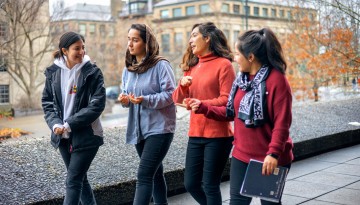
The nine undergrads will be arriving on campus through December, thanks to robust international and cross-campus collaborations. Cornell has pledged support until they graduate.
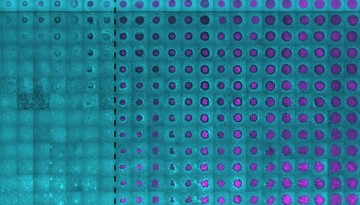
A new Cornell-led study battled strains of yeast manipulated to release different toxins at tunable and controlled rates, finding that the strain with the stronger toxin can only defeat another if its initial invading population exceeds a critical frequency or size.
Forty-four graduate students have been selected as new National Science Foundation Graduate Research Fellowship Program (NSF GRFP) fellows, joining Cornell’s community of nearly 200 NSF GRFP fellows currently on campus.
Powerful X-rays, energy tech, wireless electric-vehicle charging, and swarming robots are among the projects that earned faculty 2021 Cornell Engineering Research Excellence Awards.
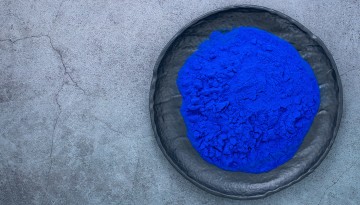
A natural food colorant called phycocyanin provides a fun, vivid blue in soft drinks, but it is unstable on grocery shelves. Cornell’s synchrotron is helping to steady it.
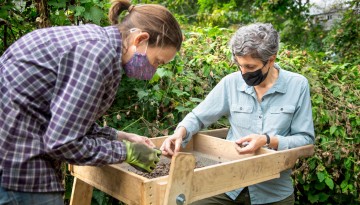
Cornell researchers and students are collaborating with community members to shed light on the role St. James A.M.E. Zion Church played in the abolitionist movement of the 1800s.
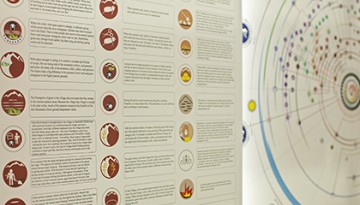
Art, sculpture, photos, and prints bring research on climate adaptation and resiliency to life at Cornell Botanic Gardens' Nevin Welcome Center. The exhibits illustrate the value and impact of a collaborative project with faculty and indigenous farmers, fishers, herders, hunters, and orchardists across the globe.
A new study co-led by a Cornell researcher has identified serpentinite – a green rock that looks a bit like snakeskin and holds fluids in its mineral structures – as a key driver of the oxygen recycling process.