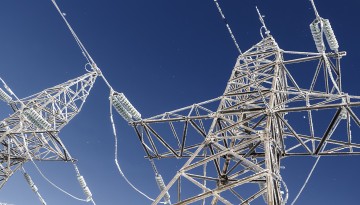
New research finds decentralized electricity markets are prone to underinvestment in resilience to rare events like the severe winter storms that crippled the Texas grid a year ago.
A new Cornell study could help inform the development of offshore wind farms by providing detailed models characterizing the frequency, intensity and height of low-level jet streams over the Atlantic coast.
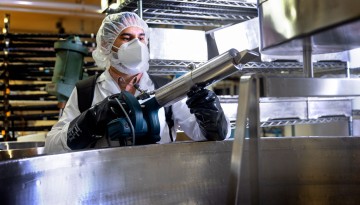
In the arid world of processing flour and food powders, where using water to sanitize is impossible, Cornell researchers are studying dry, superheated steam.
The challenges of 3D printing in space may be overcome thanks to modeling software that was created at Cornell and successfully tested aboard the international space station on Jan. 1.
Cornell's Office of Academic Integration has announced 15 new multi-investigator seed grants, including support for a project on climate change, pollen and asthma attacks and another to develop a microbial delivery system for a unique treatment of colorectal cancer.
Students are returning to Ithaca for the spring semester with significantly fewer COVID-19 infections than university models projected, an encouraging development that keeps in-person instruction on track to resume as planned on Feb. 7.
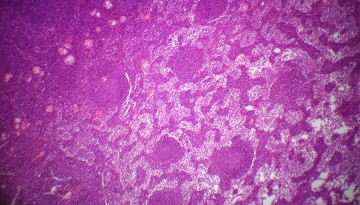
Cornell researchers have for the first time imaged the entire depth of the lymph nodes in a living mouse using three-photon microscopy, which enabled them to observe the dynamic interactions of immune cells.
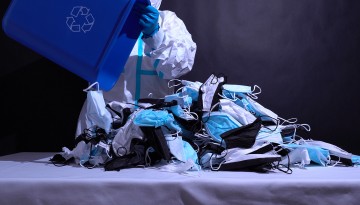
Forget incineration or landfills. To resolve the increasing, never-ending waste stream of medical PPE as a result of the pandemic, Cornell engineers suggest recycling via pyrolysis.