Cornell bioengineers have found a way to efficiently absorb and store large-scale, renewable energy from the sun, while sequestering carbon dioxide to use as a biofuel: Let microbes do the work.
With a recent 90% decline in population, sunflower sea stars – once ubiquitous all along the Pacific Coast, from Mexico to Alaska – may be on the brink of extinction.
To deflect future world food crises created by climate change, a Cornell-led international group has created a road map for global agricultural and food systems innovation.
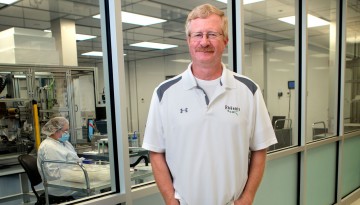
Alumnus Greg Galvin, the 2014 Cornell Entrepreneur of the Year and founder and CEO of Rheonix, is ramping up production of an automated, same-day test for the virus that causes COVID-19.
Engineers received an $880,000 National Science Foundation grant to design a new class of radio devices capable of operating across a large portion of the wireless spectrum while adaptively suppressing interferences.
Alexander Li ’20 and Haotian (Roger) Cui ’19 were elected to join the sixth cohort of Schwarzman Scholars, a program that nurtures future global leaders.
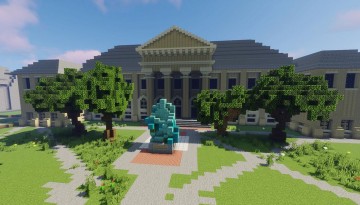
CornellCraft, a stunning virtual replica of Cornell’s Ithaca campus built in the “sandbox” gaming series Minecraft, has attracted more than 1,000 builders and players from around the globe since it launched earlier this year.
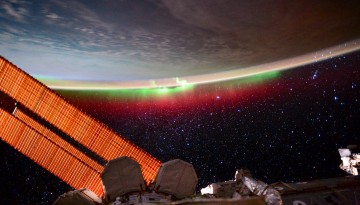
Space travel, illnesses like COVID-19 and climbing Mount Everest can trigger the body’s stress response systems in similar ways, according to new studies by Weill Cornell Medicine, space agencies and other investigators.
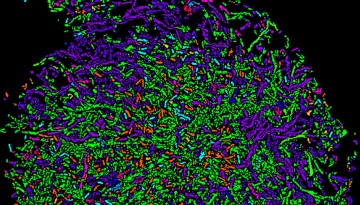
Cornell researchers developed an imaging tool to create intricate spatial maps of the locations and identities of hundreds of different microbial species, such as those that make up the gut microbiome.