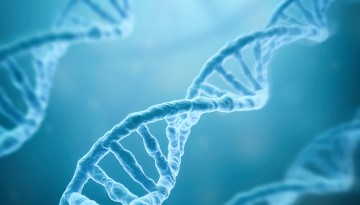
A new Cornell study presents a technique to identify viruses and bacteria in the human body and quantify injuries to organs by using dead fragments of DNA, called cell-free DNA, that roam throughout the bloodstream and urine.
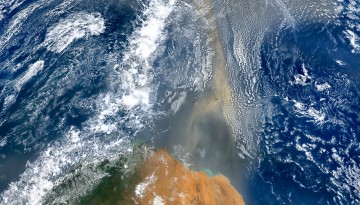
Buoyed by an atmospheric “superhighway,” smoke from lightning-sparked African savanna and forest fires deposit unexpectedly large amounts of nutrient-rich phosphorus in a river basin an ocean away.
The Office of Engagement Initiatives has awarded $1,307,580 in Engaged Curriculum Grants to 25 teams of faculty and community partners that are integrating community engagement into majors and minors across the university.
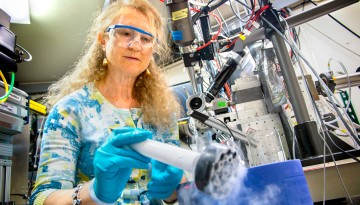
The NIH has awarded Cornell $17.4 million for Macromolecular X-ray science at the Cornell High Energy Synchrotron Source, a subfacility of CHESS specializing in biomedical research.
As methane concentrations increase in the Earth’s atmosphere, chemical fingerprints point to a probable source: shale oil and gas, according to new Cornell research published in Biogeosciences.
A new clinical model developed by Cornell Tech researchers aims to respond systematically and effectively to the growing array of digital threats against victims of intimate partner violence.
Scientists have long suspected that rapid evolutionary change in fish is caused by intense harvest pressure. Now, for the first time, scientists have unraveled the genomic changes that caused it.
An international team of astronomers led by Cornell’s Lisa Kaltenegger has characterized the first potentially habitable world outside of our own solar system.