The U.S. Department of Agriculture’s National Institute of Food and Agriculture has awarded $1.8 million to two Cornell food science research projects.
Cornell engineers have created a synthetic vascular system for soft robots capable of pumping an energy-dense hydraulic liquid that stores and deploys energy in an integrated design.
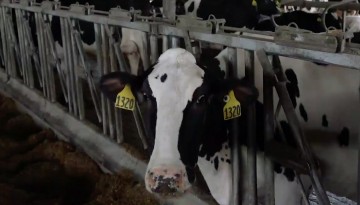
In a new collaboration, students from Dairy Herd Management teamed up with students in Topics in Cloud Computing to learn how to work together to develop the kinds of digital tools that could reshape farming.
David Wolfe, professor in the School of Integrative Plant Science, told a congressional committee in a hearing on agricultural resiliency that climate change impacts have been more complex and severe than scientists had forecast three decades ago.
Projects ranging from a soil-swimming robot that can sense conditions in the root zone in real time to computational models that can predict produce spoilage received seed funds from the Cornell Initiative for Digital Agriculture’s new Research Innovation Fund.
A hybrid system using geothermal energy for both heating and electricity could reduce campus greenhouse emissions around 25% more than using it just for heating, potentially bringing Cornell close to its goal of carbon neutrality, according to new research.