A new class of biomaterial developed by Cornell researchers for an infectious disease nanovaccine effectively boosted immunity in mice with metabolic disorders linked to gut bacteria – a population that shows resistance to traditional flu and polio vaccine.
The Cornell China Center has announced eight China Innovation Awards to interdisciplinary teams of Cornell faculty, aimed at jump-starting collaborative research and developing research teams.
The Praxis Center for Venture Development, which formally opened March 21, will help clients accelerate research and development of their technologies while supporting business development in New York state.
About 250 students from Cornell, Ithaca High School and other local schools marched, chanted and rallied against a warming world as part of the Global Climate Strike March 15 on the Ithaca Commons.
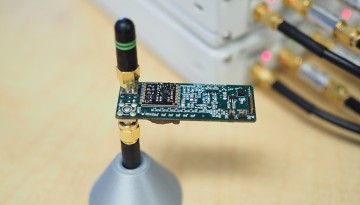
Cornell engineers have created a radio frequency identification system capable of taking measurements at widths thinner than a human hair, opening potential applications ranging from building safety to improved robotics.
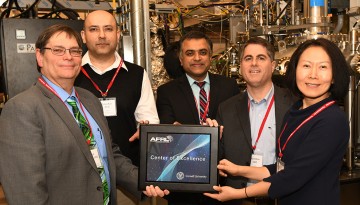
A center established by Cornell and the Air Force Research Lab aims to discover the atomic secrets of beta-gallium oxide, a new material important for the development of electronic devices.
Cornell’s first Digital Agriculture Hackathon saw students from a variety of disciplines come together to develop ways of addressing some of the world’s most pressing agricultural challenges.
New Cornell research has advanced the design of solid-state batteries, a technology inherently safer than today’s lithium-ion batteries, which rely on flammable liquid electrolytes.