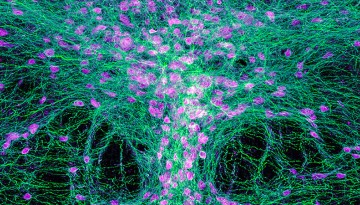
Known for its role in relieving depression, the neurochemical serotonin may help the brain execute instant, appropriate behaviors in emergency situations, according to a new Cornell study Feb. 1 in Science.
Creating new opportunities for industry partnerships and increasing engagement with the world beyond the lab could help researchers make a broader impact and meet grand challenges, said speakers at the “Deep Tech Eats Social Media for Lunch” panel, held Jan. 28 in the Upson Hall lounge.
A method intended to evaluate racial disparities in lending decisions can yield very different results depending on tiny changes in how it guesses applicants’ races, according to a new Cornell-led study.
Negative thermal expansion, or NTE, is a rare but important phenomenon, and Cornell researchers have developed a better “map” for finding NTE in materials.
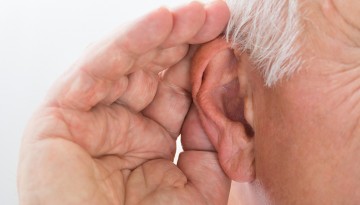
Two Cornell Tech master’s students have developed a prototype for augmented reality headsets to help people who are deaf or hard of hearing navigate one-on-one conversations.
Citizen science databases can be inconsistent, but Cornell researchers have developed a deep learning model that effectively corrects for location biases, leading to more reliable predictions.
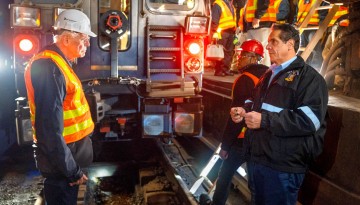
Gov. Andrew Cuomo has enlisted engineering professors from Cornell and Columbia to help solve a problem that threatened to cause an extended shutdown of a busy New York City subway line.