Cornell researchers Greeshma Gadikota, Phil Milner and Tobias Hanrath discuss their carbon capture research, including a new experimental CAPTURE-Lab at Cornell’s Combined Heat and Power Plant.
Reaffirming and extending Cornell Engineering’s longstanding commitment to providing a supportive learning environment for students of all backgrounds, the college announced a significant reorganization of its Office of Inclusive Excellence, including new leadership and a broader vision.
Bill Nye ’77, known by millions as the Science Guy and a tireless advocate for science education, received the Presidential Medal of Freedom, the United States’ highest civilian honor, at a White House ceremony Jan. 4.
An international marine research team guided by Cornell expertise has successfully completed an ambitious drilling project to investigate the plate boundary fault that ruptured during the Tohoku earthquake that devastated Japan in 2011.
Linda Nozick, director of the Department of Civil and Environmental Engineering at Cornell, helps professionals navigate risk in the Risk Analysis certificate program.
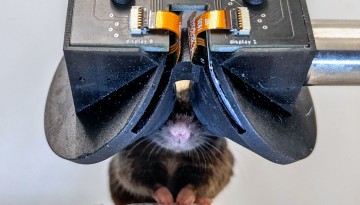
Cornell researchers built miniature VR headsets to immerse mice more deeply in virtual environments that can help reveal the neural activity that informs spatial navigation and memory function and generate new insights into disorders such as Alzheimer’s disease and its potential treatments.
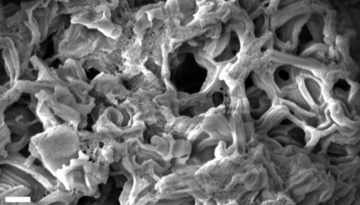
Cornell researchers have engineered a nanoporous carbon with the highest surface area ever reported, a breakthrough that is already proving beneficial for carbon-dioxide capture and energy storage technologies.