The warming of lakes in the Adirondacks, the death of long-time benefactor and alumnus Ratan Tata ’59, B.Arch. ’62, and the retirement of Martha E. Pollack as president were among the most-viewed Chronicle stories of 2024.
The Brooks Tech Policy Institute has received $3 million from the Department of Defense to establish the U.S. Semiconductor Research Hub, which will assess and improve the resilience of the global network of semiconductor infrastructure.
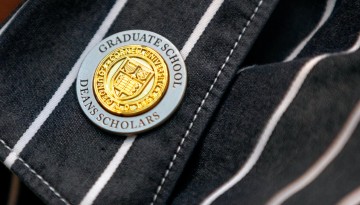
The Graduate School welcomed 50 new Dean’s Scholars. The program honors students for their commitment to academic excellence and advancing diversity, access, equity, inclusion and belonging.
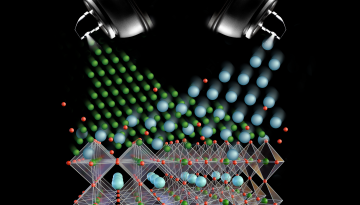
Straining the atomic arrangement of potassium niobate could tune the material with exquisite control and drive environmentally friendly advancements in consumer electronics, medical devices and quantum computing, according to new research.
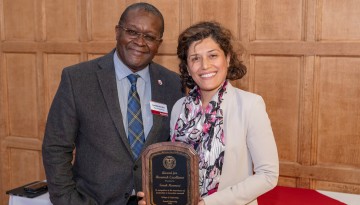
Pioneering advances in quantum computing, sustainable biotechnology, advanced manufacturing and biomedical innovation have earned six faculty members Research Excellence Awards, the highest research honor given annually by Cornell Engineering.
For their work on strengthening food crops against pests and diseases, and on hybrid materials for applications including cancer therapeutics, respectively, Cornell professors Herb Aldwinckle and Ulrich Wiesner have been elected fellows of the National Academy of Inventors.
Cornell lecturer Dirk Swart shares how employees can elevate their managerial and business acumen to transition into management in a new episode of the Cornell Keynotes podcast.
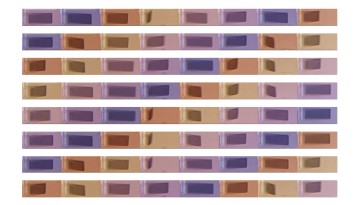
Microscopic machines engineered by Cornell researchers can autonomously synchronize their movements, opening new possibilities for the use of microrobots in drug delivery, chemical mixing and environmental remediation, among other applications.
Superhot rock geothermal – often found at least six miles below Earth’s surface – could offer abundant clean energy, finds a new report from Cornell researchers and the nonprofit Clean Air Task Force.