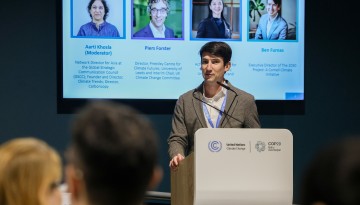
A small delegation of Cornell faculty, staff and students attended COP29 in Baku, Azerbaijan in November, where they advocated for cross-cutting partnerships to help countries achieve climate goals.
Cornell researchers develop affordable test for iron deficiency, which affects 2 billion people, disproportionately impacting women of childbearing age as well as infants and young children.
To meet a growing need, Enfield Food Distribution is working with a multidisciplinary Cornell team to design and raise funds for a larger, more welcoming facility.
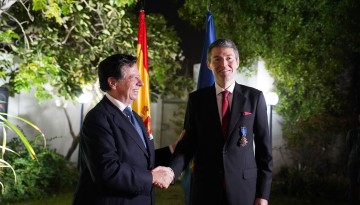
Professor Marcos López de Prado received the Officer’s Cross of the Royal Order of Civil Merit, which represents a knighthood and one of Spain’s highest honors, for his distinguished services to science.
A new study by Cornell information science researchers finds that ignoring race in college admissions leads to an admitted class that is much less diverse, but with similar academic credentials to those where affirmative action is factored in.
From introducing reusable takeout containers to Cornell’s dining facilities to reducing laboratory dependence on fossil fuels, the President’s Awards for Employee Excellence celebrated these and other achievements Nov. 19 in Barton Hall.
The Information and Decision Science Laboratory is designing a better – and safer – future for transportation with the help of a 20-by-20-foot “smart” scaled city and a fleet of motorized cars, drones and virtual reality technology.
Using the “beneficiary pays” principle for new power infrastructure will encourage investment in the grid without causing disputes over cost-sharing, new research shows.