For their work inventing heart-assist devices and biomaterials for tissue regeneration, respectively, Cornell Engineering professors James Antaki and Yadong Wang have been elected fellows of the National Academy of Inventors.
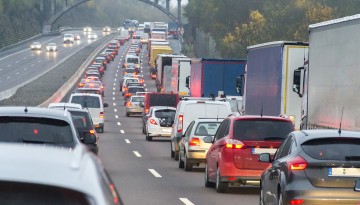
The continued sales growth of electric passenger vehicles will be having a greener, cleaner influence on air pollution in most metro U.S. regions, all the while reducing human death by mid-century.
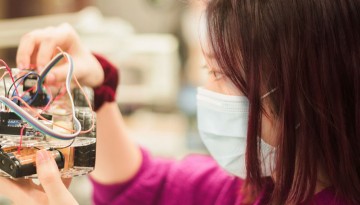
Researchers combined optical sensors with a composite material to create a soft robot that can detect when and where it was damaged – and then heal itself on the spot.
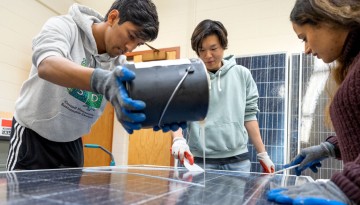
Using polyurethane, resin, epoxy – and gallons of wit – the Solar Panel Reboot student team, part of the Cornell University Sustainability Design, provides an afterlife to old, broken photovoltaic boards.
The robot’s layered filtration system will gather tiny bits of plastic the size of a sesame seed and smaller, which contaminate ecosystems and damage human and animal health.
President Martha E. Pollack has established a task force to interrogate all aspects of the undergraduate admissions process and to recommend a universitywide admissions policy and best practices that will be guided by Cornell’s founding mission and can be adapted by the admissions offices of each school and college.
Data science, molecular mechanisms, unconventional computing for optimization and machine learning, wave interaction with engineered materials, electrocatalysis, and compound semiconductor devices are among some of the research themes that helped six faculty members earn Cornell Engineering Research Excellence Awards.
Associate Professor Greg McLaskey ’05 and members of his Cornell Engineering research group have developed a method for mimicking aftershocks, findings that eventually could help scientists better predict earthquakes.
Testing time perception in an unusually lifelike setting – a virtual reality ride on a New York City subway train – an interdisciplinary Cornell research team found that crowding makes time seem to pass more slowly.