A new research and test kitchen for food entrepreneurs has opened at Cornell AgriTech, further enriching a robust ecosystem designed to help grow New York’s food and agriculture industries.
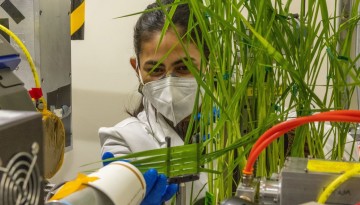
Cornell researchers have successfully transferred key regions of a highly efficient red algae into a tobacco plant to dramatically improve plant productivity and increase carbon sequestration.
Trustee emeritus and Central New York farmer Robert “Bob” Bitz ’52, a longtime supporter of the university who was instrumental in helping organize Cornell’s first advisory committee on planned giving, died June 17. He was 92.
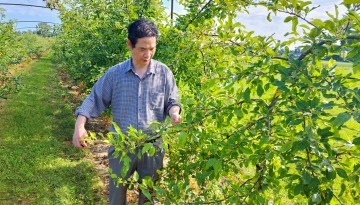
Plant geneticists have identified a mutation in a gene that causes the “weeping” architecture – branches growing downwards – in apple trees, a finding that could improve orchard fruit production.
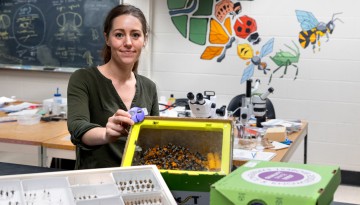
A Cornell study that revealed commercial eastern common bumblebee hives pose a threat to their wild counterparts has led one major pollination company to quickly adapt the bumblebee hive boxes they ship to growers.
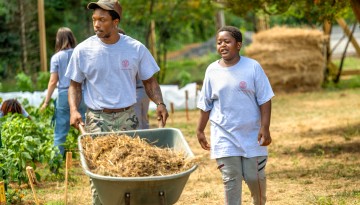
The Humphrey PACT Program promotes research collaboration between undergraduates and Hubert H. Humphrey Fellows, midcareer professionals specialized in agriculture, rural development and natural resource management, who spend one year at Cornell for professional development.
The Polson Institute for Global Development announced its new Spring 2023 grants to support research at the intersection of Global Development’s signature strengths in wellbeing and inclusion; environmental sustainability; and food and nutritional security.
The Cornell High Energy Synchrotron Source (CHESS) is set to host the Pan American Light Sources for Agriculture conference (PALSA) July 11-14. Registration is still open.