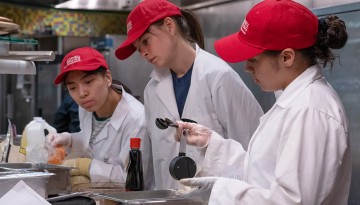
For her work in developing and teaching nutrition and food justice curricula to adolescents in New York City, Hannah Rudt ’23 has won the 2023 National Student Employee of the Year award – the first Cornellian to ever receive this honor.
A new cycle of Einaudi Center seed grants will help faculty from six colleges across Cornell tackle issues ranging from the health of endangered wild dogs to the spread of misinformation through social media.
A $1M award will support Upstate 2.0, which aims to grow the regional economy in upstate New York while helping to realize the state and nation’s goal of a net-zero carbon economy.
Cutting-edge, data-driven agricultural technologies and precision management strategies designed for the farm of the future will be developed, evaluated and demonstrated, thanks to a four-year, $4.3 million U.S. Department of Agriculture grant.
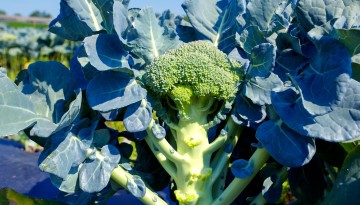
The Cornell-led Eastern Broccoli Project, which built a broccoli industry on the East Coast worth an estimated $120 million over the last 13 years, has produced a promising new broccoli variety in partnership with Bejo Seeds, a Geneva, New York-based seed company.
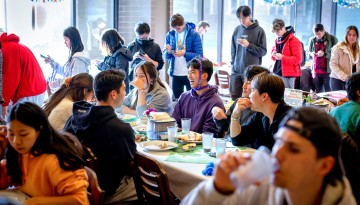
Dietetics students executed two on-campus themed dinners as the culmination of their capstone course, which simulates the experience of operating and managing a food service program.
Christine Smart, a crop pathologist known for her leadership in protecting the health of specialty crops across New York state, has been appointed the Goichman Family Director of Cornell AgriTech, effective Oct. 1.
As the world population grows and climate change threatens agriculture and global food systems, researchers across Cornell CALS are reimagining agri-food systems for the 21st century.