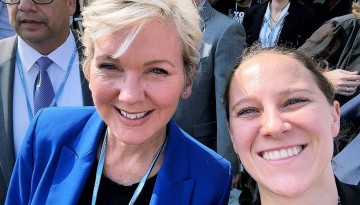
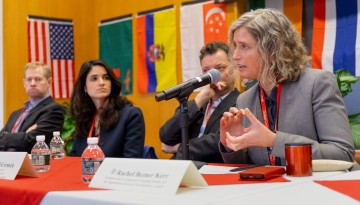
Courtney Schneider (r) took a selfie with U.S. Secretary of Energy Jennifer Granholm, one of many memorable moments at the United Nations Conference on Climate Change. Three students in the Cornell Jeb E. Brooks School of Public Policy participated in the conference, known as COP27.
This year’s 27 Global Public Voices fellows from the Einaudi Center will engage with national and international news media to make their voices heard on conditions and current events that threaten democratic institutions worldwide.
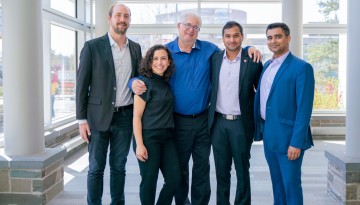
Four students in the masters of management in hospitality program won The Sustainability Hospitality Challenge with a business plan for “NIMBUS,” a carbon-neutral hotel room that folds up and moves with its guests by hot air balloon.
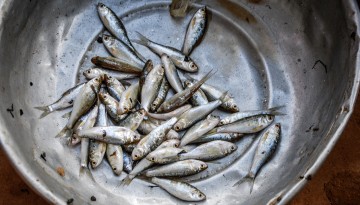
Inexpensive, small fish species caught in seas and lakes in developing countries could help close nutritional gaps for undernourished people, and especially young children, according to new research.
In an international, multi-institutional effort, Cornell’s Food Science Department will research how to increase iron and zinc absorption, thanks to a Bill & Melinda Gates Foundation grant.
More than 300 faculty, staff and students from Cornell and the new Cornell Global Hubs gathered Nov. 16-17 to discuss ideas for the next universitywide Global Grand Challenge.
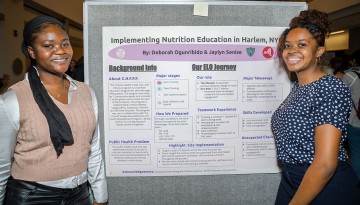
More than 100 students presented their work on a wide array of projects aimed at improving access to public health everywhere from Tompkins County to Tanzania, as part of the 2022 Global and Public Health Experiential Learning Symposium, held Nov. 11 in Cornell’s Physical Sciences Building.