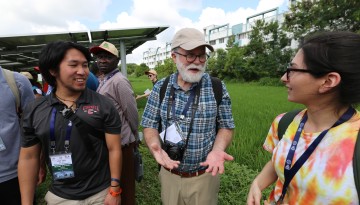
At NextGen Cassava, together with partners IITA and NRCRI in Nigeria, TARI in Tanzania and NaCRRI in Uganda, Tufan and the Survey Division team are breaking down research silos by integrating data sets between plant breeders, economists and gender specialists.
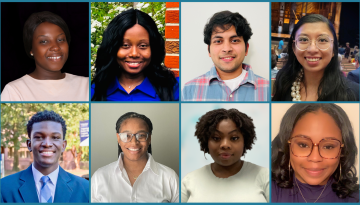
Eight graduate students from 1890 land grant institutions across the United States have been selected as part of the inaugural cohort of Thomas Wyatt Turner Fellows at Cornell University.
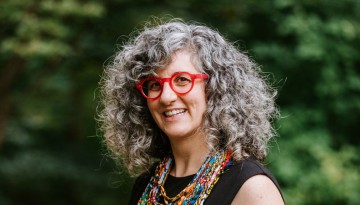
Terry Tucker, Ph.D. ‘98 earned the 2022 SUNY Chancellor's Award for Excellence in Teaching in recognition of innovative instruction that brought global education to generations of students at Cornell and beyond.
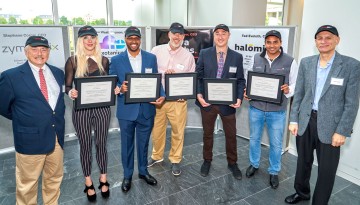
As the pandemic pomp and COVID circumstances dissipate, Cornell’s McGovern Center and Praxis Center incubators graduated five startups, putting them on the road to success.
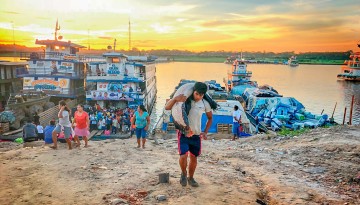
As the cherished rainforest in South America’s Amazon River region continues to shrink, the river itself now presents evidence of other dangers: the overexploitation of freshwater fish.
Summer Session, running May 31 through August 2, 2022, is open to Cornell and visiting undergraduate and graduate students, high school students and any interested adult. Undergraduates can earn up to 15 credits in on-campus, online, and off-campus courses before the fall semester.
Solving problems like climate change could require dismantling rigid academic boundaries, so that researchers of various backgrounds may collaborate through an “undisciplinary” approach.
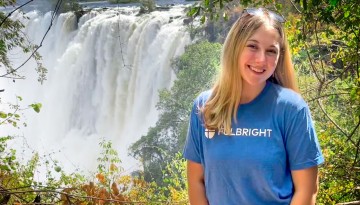
The Fulbright U.S. Student Program, administered at Cornell by the Mario Einaudi Center for International Studies, allows recipients to define and carry out their own research projects in host countries.