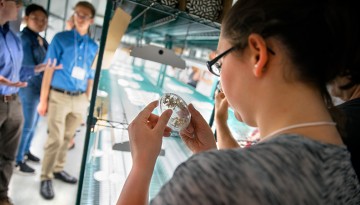
New York state high school students came to campus June 29 for the New York Youth Institute, an ambitious program that aims to build a core of young leaders to battle hunger around the world.
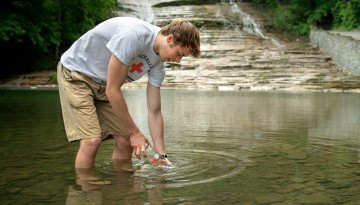
Ruth Richardson, associate professor of civil and environmental engineering, this summer is testing a water-monitoring system that could cut the time state swim areas are closed from 30 hours to 90 minutes.
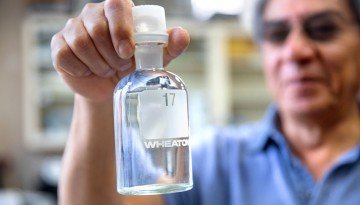
Ashim Datta, professor in biological and environmental engineering, has secured a $905,000 grant from the USDA to deepen his study of the physics of food processing.
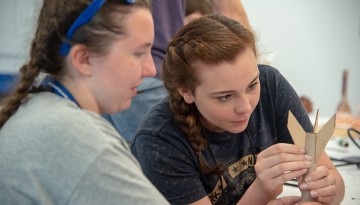
More than 500 middle and high school students from across New York gathered at Cornell’s Ithaca campus June 26-28 to participate in workshops taught by Cornell faculty, staff and graduate students during the annual 4-H Career Explorations conference.
The last data release and final official survey paper from the Arecibo Legacy Fast ALFA survey, a 13-year project led by Cornell astronomers, has just been published.
In a new Cornell study, psychologists found that participants were more likely to call male professionals – even fictional ones – by their last name only, compared to female professionals, an example of gender bias that may be contributing to inequality.
Thirteen students participating in the Ronald E. McNair Post-Baccalaureate Achievement Program at Cornell traveled to Washington, D.C., June 28 to advocate for federal programs assisting first-generation and low-income college students.