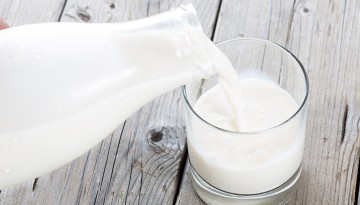
The “sell-by” dates on milk cartons may become more accurate, as Cornell food scientists have created a predictive model that examines spore-forming bacteria, according to the Journal of Dairy Science.
New research from Cornell's Collective Embodied Intelligence Lab examines how popcorn’s unique qualities can power inexpensive robotic devices that grip, expand or change rigidity.
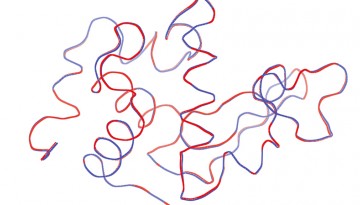
Using an algorithm developed by Cornell physicist Veit Elser, a group led by colleague Sol Gruner has determined the protein structure of a microcrystal using discarded data from another group.
A new study from Cornell researchers finds domestic abusers can choose from thousands of apps to spy on their partners, from traditional spyware to software intended for legitimate purposes, like finding phones.
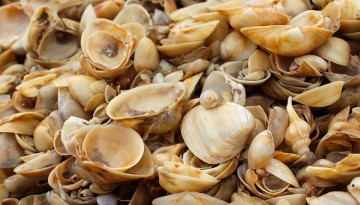
Cornell and Paleontological Research Institution scientists dug into the Colorado River's estuary mudflats to learn how upstream dams affect downstream mollusks.
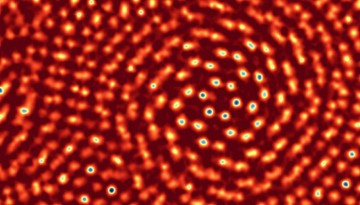
A group led by applied and engineering physics professor David Muller has achieved a record for electron microscopy resolution, using a device developed at Cornell by professor Sol Gruner.