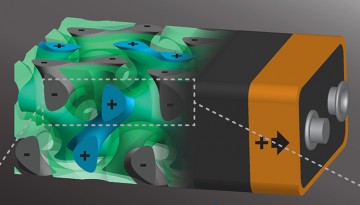
Uli Wiesner and collaborators have developed a block copolymer self-assembled 3D energy storage architecture that could help change the way batteries are constructed.
The new master of engineering program in materials science and engineering gives students a year of classroom instruction along with a co-op work experience that prepares them for the job market.
Cornell University held the first Annual Cornell Cancer Research Symposium at the College of Veterinary Medicine on April 5-6 to showcase the breadth of cancer research on the Ithaca campus.
Geophysicists examining glacier changes in the Russian Arctic have found that the rate of ice mass loss has nearly doubled over the last decade when compared to records from the previous 60 years.
Cornell researchers seek to answer questions about the origin of a key step in transcription – the process of copying codes in DNA and transferring them to RNA in order to make proteins.