Two female researchers, an epidemiologist and a bacteriologist, both at the College of Veterinary Medicine, have received awards for their cutting-edge research.
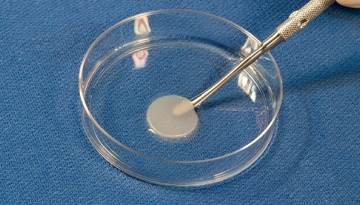
Development and testing by engineering professor Larry Bonassar and his group helped a New England biomedical firm land an $87 million contract to distribute their product in Japan.
In wake of U.S. court's preliminary injunction regarding the DACA program, the university has extended its financial assistance program for students who must apply for status extensions.
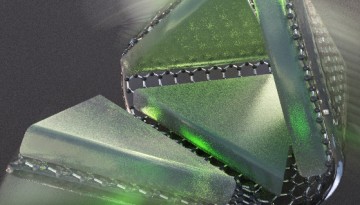
A group led by physics professors Paul McEuen and Itai Cohen has made nanometer-scale machines from graphene and glass, which could be used for sensing, interfacing with electronics and more.
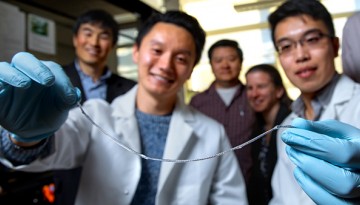
In an example of cross-campus collaboration, a group led by Minglin Ma has developed a unique implant for controlling type 1 diabetes, which affects more than 1 million Americans.
Mathematician Steve Strogatz posits an answer to an understood but unexplained medical phenomena: The incubation periods of many diseases follow a similar "lognormal" pattern.
Using multi-photon microscopy developed at Cornell, a group led by Nozomi Nishimura has shown the ability to produce detailed, 3-D images of atherosclerotic plaque.
President Martha E. Pollack has committed the university to a new multi-institution initiative to make public data pertaining to career outcomes for life sciences doctoral students and postdoctoral researchers.