Even with strict financial constraints, Buffalo, Rochester, Syracuse and Utica are tackling revitalization, Cornell researchers and city officials said at a recent regional development conference.
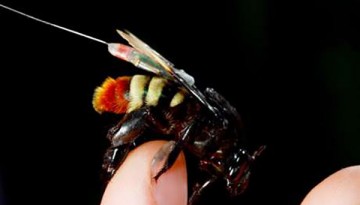
By looking at how past climate changes may have affected orchid bees, Cornell researchers make predictions of how these forest bees might respond to future climate changes.
Robin Davisson looks back on her time at Cornell, and forward to new opportunities, as she and husband Cornell President David Skorton prepare to move in 2015.
A student team that devised a plan to sell certain public tweets to Google and Microsoft has won first prize in the university’s second annual Stephen S. J. Hall Ethics Case Competition held March 7 at the School of Hotel Administration.
With so few available academic jobs, Cornell will start a NIH-funded pilot program to help train life sciences graduate students and postdocs for nonacademic positions. A kickoff event is March 18.
Eight of Cornell’s graduate engineering fields, three computer science specialties and five other science areas were ranked in the top 10 in U.S. News and World Reports’ 2015 “Best Graduate Schools,” released March 11. Cornell Law School earned the top spot for its diverse student body.