Cornell researchers are demonstrating how artificial intelligence – particularly deep learning and generative modeling – can accelerate the design of new molecules and materials, and even function as an autonomous research assistant.
The Graduate Diversity and Inclusion Awards recognized members of the graduate community for their impacts on advancing access, engagement and belonging through service and leadership.
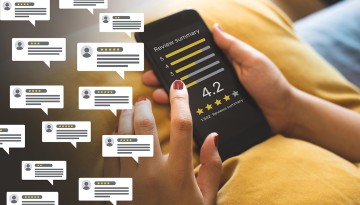
Researchers in the Cornell SC Johnson College of Business found that consumers tend to overestimate fractional star ratings and underestimate fractional Arabic numerals. In either case, the ratings can be misleading.
Cornell researchers have found the developers of large language models and the educators who use them have different ideas about the potential harms they may cause, a finding that researchers say underscores the need for educators to be more involved in the tools’ development.
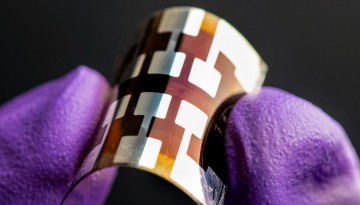
By finding the atomic equivalent of a perfect handshake between two types of perovskite, researchers at Cornell have built solar cells that are not only high-performing, but exceptionally durable.
Inspired by the mechanisms plants use to store carbon, researchers found that sunlight can power the capture and release of carbon dioxide, which could vastly lower costs and net emissions.
Cornell researchers created a machine learning-based model that can forecast, with greater accuracy than current methods, the impact severe wildfire conditions will have on solar electricity generation.