Doctoral student Cheyenne Reuben-Thomas is one of five fellows Cobell Graduate Summer Research Fellows for 2025, selected from a pool of over 100 graduate student applicants.
A new material developed at Cornell could significantly improve the delivery and effectiveness of mRNA vaccines – used to fight COVID-19 – by replacing a commonly used ingredient that may trigger unwanted immune responses in some people.
Cornell’s newest Ph.D.s found success even through the unexpected events of the last few years, President Michael I. Kotlikoff reminded nearly 400 doctoral graduates at the 2025 Ph.D. Recognition Ceremony on May 23 at Barton Hall.
Scientists have discovered a way to convert fluctuating lasers into remarkably stable beams that defy classical physics, opening new doors for photonic technologies that rely on both high power and high precision.
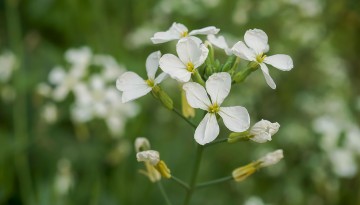
Flowers grow stems, leaves and petals in a perfect pattern again and again. A new Cornell study shows that even in this precise, patterned formation in plants, gene activity inside individual cells is far more chaotic than it appears.
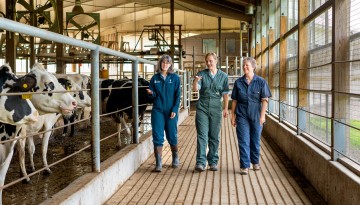
Researchers have developed tests to assess low-level or chronic inflammation in dairy cattle that they hope will improve animal health and support New York’s food supply.
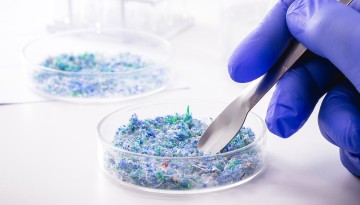
Researchers developed an inexpensive and potentially scalable approach to bind together a pair of popular but incompatible polymers, thereby creating a more useful, high-quality plastic recycling additive.