The Information and Decision Science Laboratory is designing a better – and safer – future for transportation with the help of a 20-by-20-foot “smart” scaled city and a fleet of motorized cars, drones and virtual reality technology.
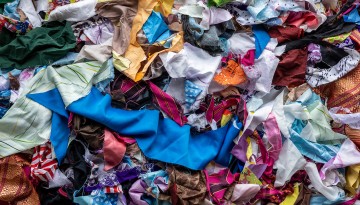
A research team led by Larissa Shepherd, M.S. ’13, Ph.D. ’17, assistant professor in the College of Human Ecology, has developed an elegant and sustainable way to clean up waterways: reusing one waste product to remove another.
Cornell scientists are developing a library of basalt-based spectral signatures that not only will help reveal the composition of planets outside of our solar system, but also could demonstrate evidence of water on those exoplanets.
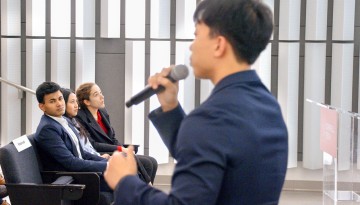
Five Johnson School MBA students designed the case, organized the judging and facilitated the Emerging Markets Institute’s Corning Case Competition, “Powering Vietnam’s Future: The Rise of Electric Vehicles,” which attracted a record number of entrants.
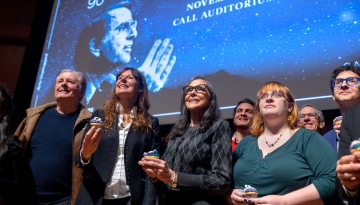
In person and online Nov. 9, thousands attended an interdisciplinary program of research presentations and music celebrated Carl Sagan’s legacy on what would have been his 90th birthday.
A Cornell ILR School research team found that having either the same gender or the same nationality as an opponent leads to greater perceptions of rivalry and subsequent better effort-based performance.
Bobby J. Smith II, Ph.D. ’18, will return to Cornell on Nov. 14 to give the inaugural Bouchet Lecture, “The Emancipatory Vision of L.C. Dorsey: Black Food Futures and the Struggle for Civil Rights.”
Cornell researchers have uncovered new details about how high-speed metallic collisions can form strong, durable atomic bonds, offering insights that could enhance 3D printing and other manufacturing techniques.