Researchers at Cornell, Stanford and the University of Pennsylvania found that AI-generated college admissions essays are most similar to essays authored by students who are males, with higher socioeconomic status.
New research from the Cornell SC Johnson College of Business explores how the quality and strength of one’s loyalty to another can be influenced by the willingness to support an indirect tie, even when the outsider has been accused of unethical behavior.
Nicola Dell, associate professor at the Jacobs Technion-Cornell Institute at Cornell Tech, and novelist Ling Ma, MFA ’16, have been awarded 2024 MacArthur Foundation fellowships — more commonly known as “genius grants.”
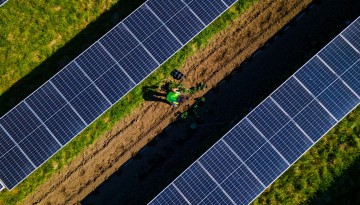
A small experimental apple orchard at Cornell’s Hudson Valley Research Laboratory may soon be topped by solar panels, which would capture the sun’s energy and may prove beneficial to the trees.
A Cornell-led collaboration has developed the first dual-sided – or “dualtronic” – semiconductor that combines photonic and electronic functions simultaneously.
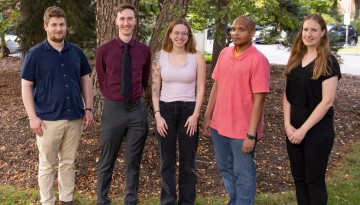
Five postdoctoral scholars were honored with Postdoc Achievement Awards as part of Cornell’s participation in National Postdoc Appreciation Week. The awards recognize excellence in community engagement, leadership and mentoring.
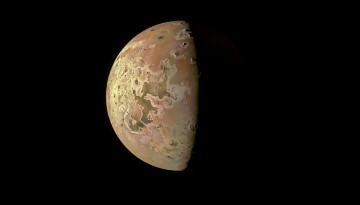
By examining Jupiter’s moon Io – the most volcanically active place in the solar system – Cornell astronomers can study a vital process in planetary formation and evolution: tidal heating.
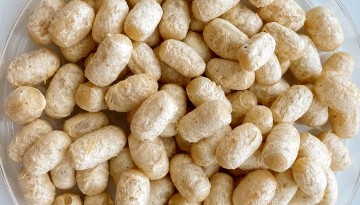
Catering to an aging population, Cornell food scientists have created a nutritious snack made from milk for those who have trouble swallowing. These puffs dissolve in your mouth instantly.
“Cultural prompting” – asking an AI model to perform a task like someone from another part of the world – resulted in reduced bias in responses for the vast majority of the more than 100 countries tested by a Cornell-led research group.