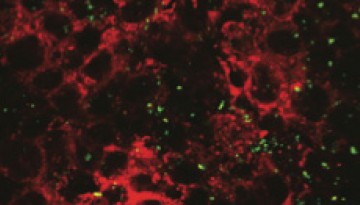
A new study at Cornell has identified two key proteins that cancer cells need to travel and have uncovered a pathway that treatments could block to keep cancer from spreading. (Feb. 21, 2012)
Extension educators in New York City are changing the way that people at mosques, senior centers and soup kitchens eat by giving free nutrition workshops and sidewalk education.
Personality disorders could be more effectively diagnosed by identifying and targeting the disrupted neurobiological systems where the disorders originate, report Cornell researchers.
Billions of engineered nanoparticles in foods and pharmaceuticals are ingested by humans daily, and new Cornell research warns they may be more harmful to health than previously thought. (Feb. 16, 2012)
Taking care of an aging or disabled loved one can be hazardous to your health, but certain personality traits appear to reduce caregivers' risk for health problems.
The more ongoing stress children are exposed to, the greater the odds they will become obese by adolescence, reports Cornell environmental psychologist Gary Evans in the journal Pediatrics. (Jan. 30, 2012)
Cornell is working with the University of Hawai'i-Manoa to conduct a three-year NASA study on the diets and food issues of six volunteers who spend four months in a simulated Mars habitat. (Jan. 26, 2012)
In a few months, nearly every home in Atima, Honduras, will have safe, clean drinking water, thanks to a treatment plant principally designed by Cornell engineering students. (Jan. 26, 2012)
The stacked rapid sand filter, developed by members of Cornell's AguaClara research team, could well be the reason that Tamara now has some of the best water in all of Honduras. (Jan. 26, 2012)