A new study finds that despite increasing numbers of bald eagles, poisoning from eating dead carcasses or parts contaminated by lead shot has reduced population growth by 4% to 6% annually in the Northeast.
While the world has celebrated the arrival of highly effective vaccines against COVID-19, new work by researchers at Weill Cornell Medicine and the University of Oxford shows that even unrelated vaccines could help reduce the burden of the pandemic.
U.S. Sen. Kirsten Gillibrand (D-New York) visited the College of Veterinary Medicine on Jan. 7 to discuss bipartisan legislation proposing to establish centers of excellence for pandemic response and prevention.
Tapo Bhattacharjee, assistant professor of computer science at Cornell Bowers CIS, will use a four-year, $1.5 million grant from the National Science Foundation to develop assistive robotics for people with physical disabilities and their caregivers.
In a significant move to fight COVID-19 and other contagious pathogens in health care settings, the U.S. Environmental Protection Agency (EPA) has granted Sterifre Medical, Inc. registration to begin commercial deployment of the company’s novel, automated device disinfectant system.
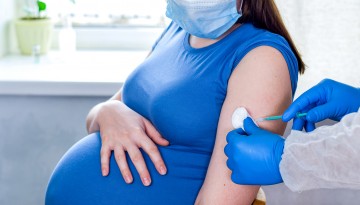
COVID-19 vaccination of expectant mothers elicits levels of antibodies to the SARS-CoV-2 outer “spike” protein at the time of delivery that don’t vary dramatically with the timing of vaccination during pregnancy and thus don’t justify delaying vaccination, according to a study from researchers at Weill Cornell Medicine.
Utilizing a test strip and small reader that return results in minutes, a faculty team’s proof-of-concept test could improve access by enabling more screening in community settings.
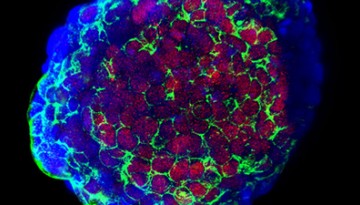
Aggressive and relatively common lymphomas called diffuse large B cell lymphomas have a critical metabolic vulnerability that can be exploited to trick these cancers into starving themselves, according to a study from Cornell researchers.
Seven-year-old children performed better on a challenging task requiring sustained attention if their mothers consumed twice the recommended amount of choline during their pregnancy, a new Cornell study has found.