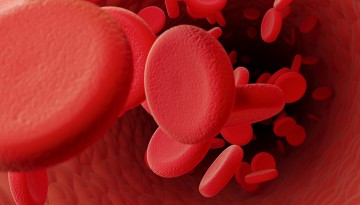
According to new research out of Weill Cornell Medicine, a protein that masterminds the way DNA is wrapped within chromosomes has a major role in the healthy functioning of blood stem cells, which produce all blood cells in the body.
Using an innovative new imaging technique, researchers at Weill Cornell Medicine have revealed the inner workings of a family of light-sensing molecules in unprecedented detail and speed.
Cornell's Office of Academic Integration has announced 15 new multi-investigator seed grants, including support for a project on climate change, pollen and asthma attacks and another to develop a microbial delivery system for a unique treatment of colorectal cancer.
Cornell researchers have for the first time imaged the entire depth of the lymph nodes in a living mouse using three-photon microscopy, which enabled them to observe the dynamic interactions of immune cells.
Brooks School of Public Policy Dean Colleen Barry has been elected to a prestigious and influential national organization that seeks to enhance public understanding of Social Security, Medicare, Workers’ Compensation, and Unemployment Insurance and other social insurance programs as well as related policy areas.
Seven Cornell faculty members have been elected fellows of the American Association for the Advancement of Science, the world’s largest general scientific society. This year's fellows, 564 in all, will be honored at a virtual event Feb. 19.
As many as one in four children in Flint, Michigan – far above the national average – may have experienced elevated blood lead levels after the city’s 2014 water crisis, finds new research by Jerel Ezell, assistant professor in the Africana Studies and Research Center.
Public health practitioner Julie Edwards, MHA has joined Cornell Health as the new director of the Skorton Center for Health Initiatives, a department providing university leadership for addressing college health concerns including alcohol misuse, hazing, suicide, sexual violence and bias.