The Office of the Vice Provost for Research has announced a new seed grant mechanism to fund preliminary investigations into medical and biological aspects of SARS-CoV-2, the virus that causes COVID-19.
Cornell thought leaders discussed the balance between public health and economic health, and the role government plays in finding a path forward during COVID-19 in a webinar April 30.
A new study of planaria, a type of flatworm, shows how stem cells are able to postpone their own death in order to respond to an injury that needs their attention.
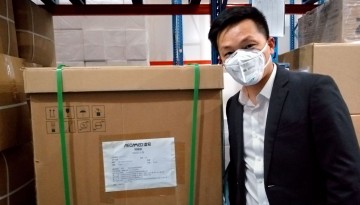
A determined group of Cornellians in and with connections to China has been helping to provide crucial equipment and supplies for medical professionals at Weill Cornell Medicine in New York City and Cayuga Medical Center in Ithaca.
After two years as interim dean, Rachel Dunifon has been named the Rebecca Q. and James C. Morgan Dean of the College of Human Ecology, Provost Michael Kotlikoff announced May 6.
Collaborating across disparate disciplines to tackle the grand challenges facing humanity is intrinsic to Cornell’s unique brand of research innovation.
When Kaavian Shariati ’20 learned he had Type 1 diabetes shortly before arriving at Cornell, he was shocked not only by his new responsibilities – monitoring his insulin levels day and night – but by the state of diabetes research.