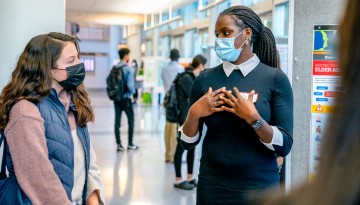
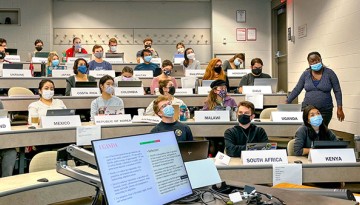
The 2021 Global and Public Health Experiential Learning Symposium featured projects aimed at improving access to public health everywhere from Tompkins County to Tanzania.
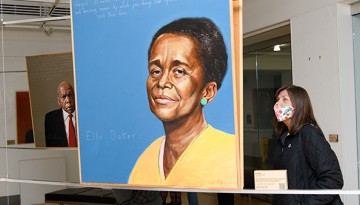
An exhibit in the College of Human Ecology includes portraits of citizens who courageously addressed issues of social, environmental and economic fairness.
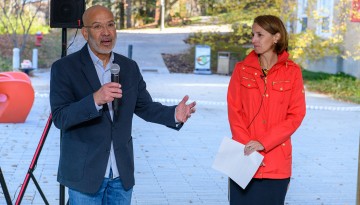
The College of Human Ecology launched its new Department of Human Centered Design Nov. 10, uniting the design faculty from two existing departments and creating opportunities for new collaborations.
During the COP26 climate change conference, 45 Cornell undergraduate and graduate students plugged in from Ithaca to hear international negotiations first-hand and environmental history.
With support from Cornell, the Dryden Rail Trail is a step closer to connecting Ithaca and several nearby communities with a corridor that enables off-street commuting and expands access to natural areas.
Zinc deficiency is prevalent around the world, and among children, these mineral shortfalls can lead to stunting, embryonic malformations and neurobehavioral abnormalities.
The Cornell Center for Social Sciences grant program, which supports social science research by Cornell faculty members and conferences that directly benefit Cornell faculty and students, has awarded $145,136 for 15 proposals for fall 2021.
Several Cornellians – appointed by Gov. Kathy Hochul – will explore how thewarming environment will affect New York’s communities, ecosystems and economy in the new Climate Impacts Assessment project.
First-generation students bring a unique perspective to their educational experience at Cornell, and the university is committed to fostering opportunities for them.