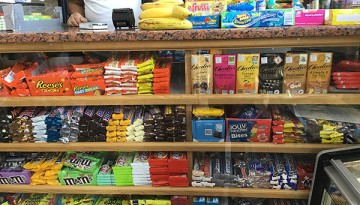
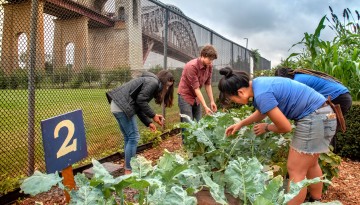
A recent study brought together Cornell students and faculty and New York City teenagers to explore how nutrition education can improve nutrition and promote positive youth development in places with little or no access to healthy, affordable food.
Cornell food scientists now show that the leftover pulp from the red wine making process has the potential to be a nutritive, illness-reducing treasure.
The U.S. Department of Agriculture has awarded $3.9 million in funding to the Cornell University Agricultural Experiment Station to support 52 projects across three colleges.
On Oct. 4, Jordan Tralins ’23, founder of the COVID Campus Coalition, will moderate a virtual discussion between college students and U.S. Surgeon General Dr. Vivek Murthy.
Cornell is one of only seven institutions across the U.S. that will receive a funding award from the National Institutes of Health through a program aimed at increasing minority faculty in the biomedical sciences.
BCTR's Residential Child Care Project confirmed 79 fatalities nationally over 26 years resulting from physical and mechanical restraints of children living in out-of-home care settings.
The newly launched Cornell Jeb E. Brooks School of Public Policy will help shape a better world, university leaders and the school’s inaugural dean said at a Sept. 15 reception in Martha Van Rensselaer Hall.
Cornell Cooperative Extension supports residents of every borough in New York City, thanks to its long-standing community relationships and faculty research and expertise.
Tameka Ellington presented on her new exhibition, which synthesizes research in history, fashion, art and visual culture to reassess the “hair story” of peoples of African descent. The lecture was part of the “Fashion & Social Justice” lecture series.