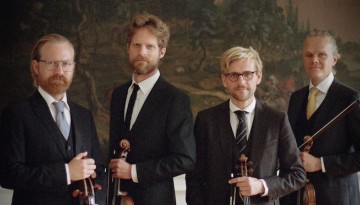
At Cornell, the GRAMMY-nominated quartet will perform works by Caroline Shaw, Haydn, Shostakovich, and a selection of their original compositions and traditional folk tunes.
Alfred H. Schatz, an emeritus professor of mathematics who taught at Cornell for nearly 50 years, died at home on Oct. 11 after a long bout with Parkinson’s disease. He was 90.
The “REALTALK” speaker event, hosted by the Gender Equity Resource Center and the Cornell chapter of the Delta Gamma Sorority, brought young, successful female and gender-expansive alumni back to campus to share their stories.
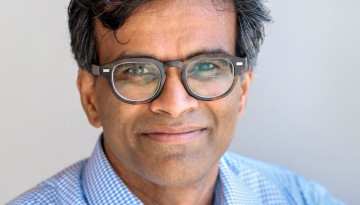
Sendhil Mullainathan ’93, a scholar and writer who uses machine learning to find new approaches to complex problems in medicine, policy and human behavior, will deliver the Messenger Lectures on Nov. 11-13.
In urban settings, a mix of slow- and fast-charging stations installed at strategic locations is most convenient for drivers and increases profitability up to 100%.
Diya Jale, hosted by the student group Society for India on Nov. 2, will continue a tradition of creating community and celebrating Diwali, the Hindu festival of lights.
Cornell researchers developed a fairer, more equitable method for choosing top job candidates from a large applicant pool in cases where insufficient information makes it hard to choose.
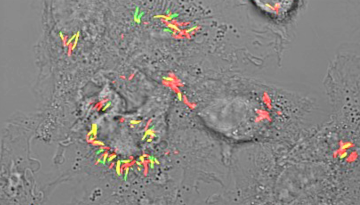
Researchers in the College of Veterinary Medicine and colleagues have discovered that a protein complex that helps fight cancer cells also slows the growth of tuberculosis – a finding that could mean better treatments for both diseases.
After decades of engineering probes to study natural environments, a Cornell engineer has adapted the technology to improve drug manufacturing processes with pharmaceutical company Merck.