Maddie’s Fund®has awarded the Maddie’s® Shelter Medicine Program (MSMP) at Cornell University a new $4.6 million grant to sustain and grow its work over the next five years.
For undergraduate would-be entrepreneurs, this competition encourages examining micro- or macro-level problems and envisioning ways to fix them via innovative business ventures.
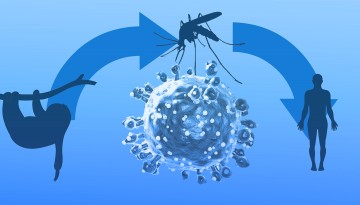
For the first time, scientists have tracked the dispersion of the Oropouche virus in the Brazilian Amazon region, an important first step to control future outbreaks of a disease with more than 100,000 reported cases since the 1960s.
Weill Cornell Medicine researchers have discovered a mechanism that ovarian tumors use to cripple immune cells – blocking the energy supply T cells depend on. The work points toward a promising new immunotherapy approach for ovarian cancer.
Bring your dog out for a fun run, hear from experts about the election and the future of democracy, and listen to the music of a 1914 alumnus who experimented with blending Chinese and Western musical traditions.
“Sigrid Nunez’s novels meditate on life and the world with unfussy clarity and lightness. Today she is one of the most profound living American writers."
The event in the Duffield Atrium attracted over 500 attendees and brought science down to size, offering hands-on activities and live virtual tours that showcased the world of the very, very small.