The Engineers in Action project team has built footbridges connecting thousands in Eswatini to schools, health care and markets - now the group is expanding their impact with two new projects.
In his new book, filmmaker Austin Bunn delves into the mechanics of the short form by reprinting notable scripts and interviewing the films’ creators, as well as providing insights and advice based on his own screenwriting career.
This renewed funding will enable the Innovation Lab for Crop Improvement to strengthen its interdisciplinary efforts to support demand-driven, socially responsive crop improvement programs in key regions around the world.
In “Purchase,” a new collection of poems from Associate Professor Lyrae Van Clief-Stefanon, the author seeks consolation for grief by turning to specific sources of beauty.
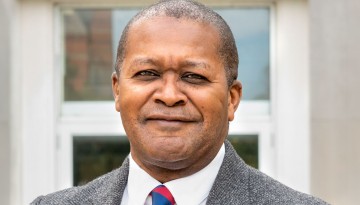
Judy Cha, Ph.D. ’09, professor of materials science and engineering in Cornell Engineering, and Yuval Grossman, professor of physics in the College of Arts and Sciences, have been elected as fellows of the American Physical Society (APS).
An exhibit in Mann Library highlights the contributions of the first Haudenosaunee women in the College of Human Ecology, who benefited from home economics programs but were constrained by limited financial support, cultural stereotypes and gender bias.
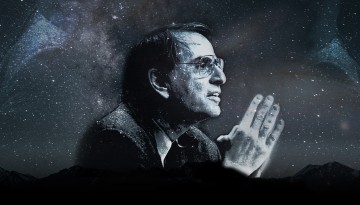
On what would have been astronomer and planetary scientist Carl Sagan’s 90th birthday, Cornell’s Carl Sagan Institute will celebrate his legacy in an interdisciplinary day of science, music and more as part of the College of Arts and Sciences’ Arts Unplugged series.
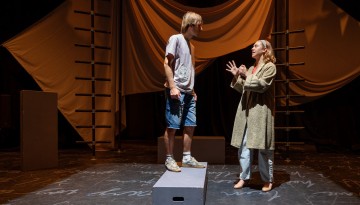
“Orlando’s Gift,” a new play written and directed by David Feldshuh, professor of performing and media arts, and inspired by Virginia Woolf’s novel “Orlando,” will premiere Nov. 1 at the Schwartz Center.