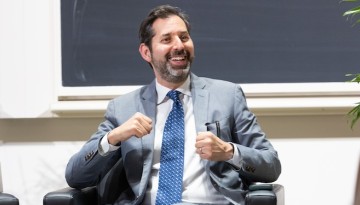
Reflecting on his time on campus as this year's Zubrow Distinguished Visiting Journalist during the university's Freedom of Expression theme year, David Folkenflik '91 says "freedom of expression isn't at its most potent as an issue or principle when it's easy. In some ways, it matters most when it’s hard."
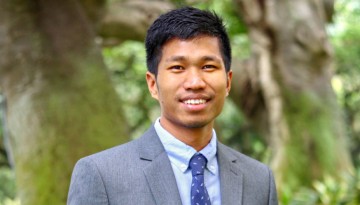
Journalist Kyaw Hsan Hlaing, who exposed the realities of violence perpetrated by the military in his native Myanmar, has been awarded a Paul and Daisy Soros Fellowship for New Americans to support his work toward a Ph.D. in political science at Cornell.
Apps that use artificial intelligence to help with tutoring, labeling medical images and perfecting your form while exercising, websites that address social issues with technology, and a robot that may one day colonize Mars all won awards at the annual Bits On Our Minds student technology showcase.
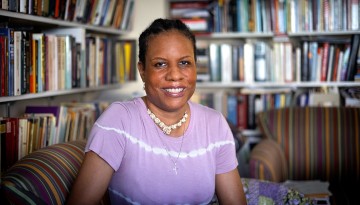
Professor of Africana studies Riché Richardson says reclaiming country music for the Black community and rebranding the genre as an inclusive space are triumphs of Beyoncé’s new album, “Cowboy Carter.”
Professors Peng Chen, Mariana Wolfner ’74 and Timothy A. Ryan, M.S. ’86, Ph.D. ’89, have been elected to the American Academy of Arts and Sciences, the academy announced on April 24.
Greater understanding of beneficial characteristics of the human brain, such as flexibility and reliability, will help Wenbo Tang develop therapies for human diseases – and to improve AI systems.
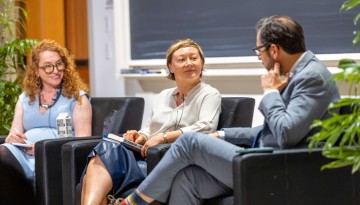
Speakers at “Dissident Writers: A Conversation” explored how writers keep freedoms open for others by taking risks to criticize governments or societies in environments where there is a cost.
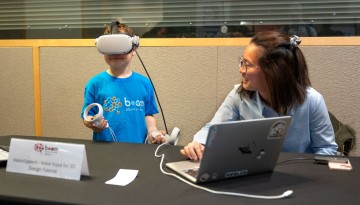
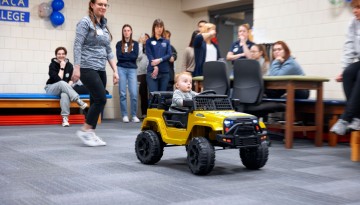
The Big Red Adaptive Play and Design Initiative has brought independence and joy to local children with disabilities – and has created space for the engineering of assistive technologies at Cornell.