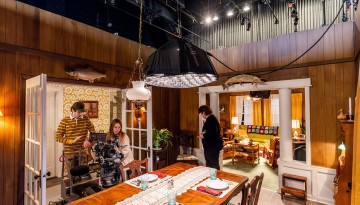
Throughout spring 2024, a set installed on the Kiplinger Theatre stage for the short film “Remembering Colin Stall" doubled as an experimental zone for film and theater technology classes.
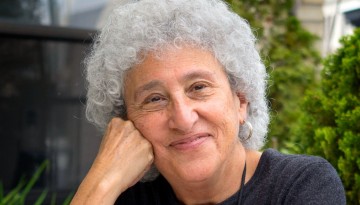
Marion Nestle, a food policy expert and public health advocate, will share her experience bridging research, policy and public engagement in a talk, “Food Politics: An Agenda for 2024.”
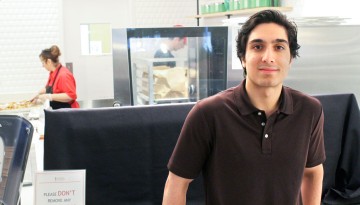
Cornell Dining serves more than 750 kosher and halal meals per week – in addition to regular kosher meals at the Center for Jewish Living and commissary items around campus.
The newly assembled Fred Young Submillimeter Telescope, nearly the size of a five-story building, was unveiled April 4 at an event in Xanten, Germany, attended by numerous German municipal officials – as well as Fred Young, himself.
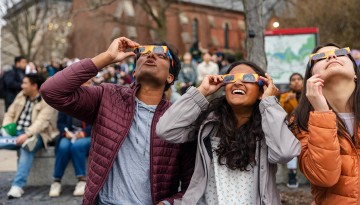
More than 400 students rode eight charter buses to Rochester, New York, to witness the total solar eclipse. Back on campus, students gathered in locations including Libe Slope, Ho Plaza and the Arts Quad.
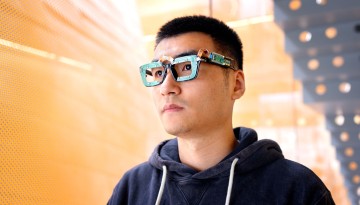
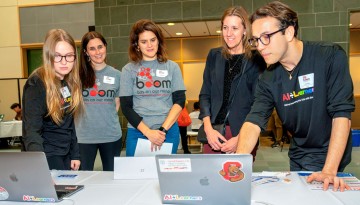
AI memory aids, post-apocalyptic video games and a stock trading app are among the digital creations that will be on display at Bits On Our Minds, the premier showcase for Cornell student projects in cutting-edge digital technology.